Authenticated Only Card: When Grade Is Not the Point
July 9, 2026 · 6 min read · By BGLAD
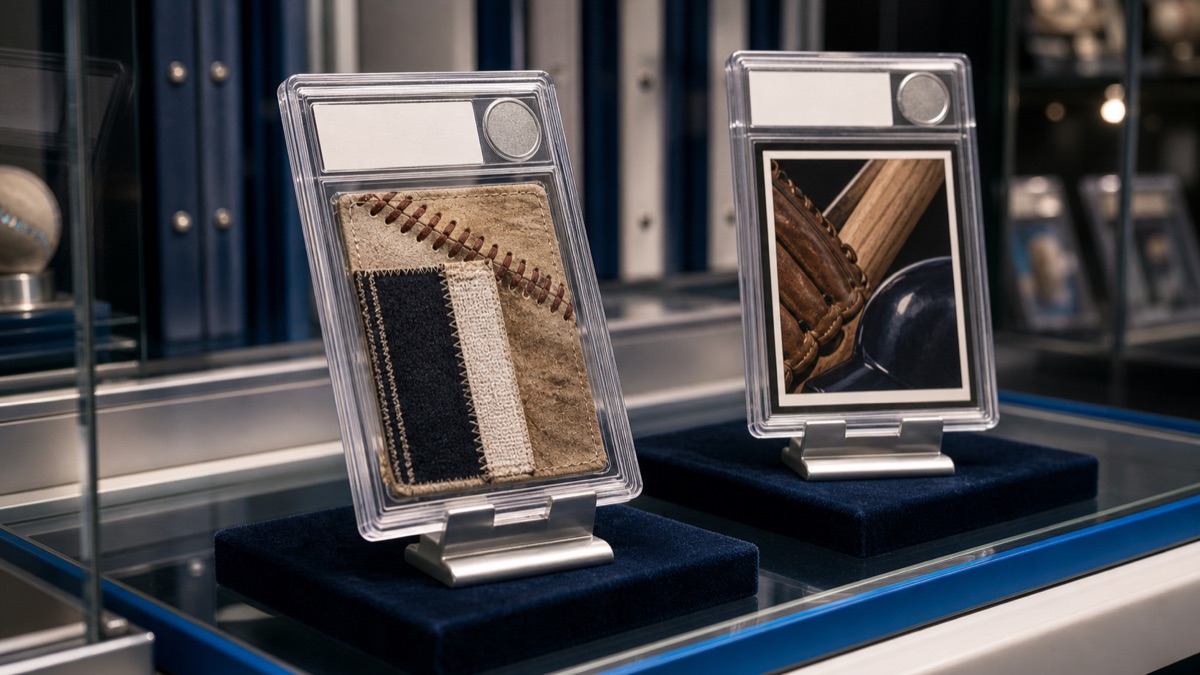
An authenticated only card is a card a grading company has identified as genuine without assigning a standard numeric grade. That can be the right outcome when authenticity, not condition rank, is what buyers and collectors need most.
A number is useful only when it tells the right story. Some cards are real, desirable, and worth protecting even when alterations, damage, writing, trimming, or unusual production issues make a straight grade unlikely.
What authenticated only card means
Authenticated only is not the same as unimportant. It means the card has been reviewed for authenticity, but the holder does not present it as a normal numeric-grade example. The exact label language varies by company and situation, so read the label carefully.
Some cards receive an authentic-only result because the submitter requested it. Others get that treatment because the card is genuine but has an issue that prevents or complicates numeric grading. Common examples include trimming, recoloring, restoration, missing paper, severe damage, evidence of alteration, or a card type that is difficult to fit into a normal scale.
The first question is not "why didn't it grade higher?" The first question is whether the holder answers the most important doubt. For many older cards, signed cards, or scarce regional issues, confirmation that the card is real can be the main value of the slab.
- Authentic: the card is judged genuine, but no standard numeric grade is assigned.
- Authentic altered: the card is real, but work or changes are noted.
- Numeric grade: the card is genuine and assigned a condition score.
- Details or qualifier language: the holder calls out a condition issue that affects interpretation.
When authentication matters more than grade
Authentication matters most when raw buyer confidence would be low. Pre-war cards, rare regional issues, hand-cut cards, scarce oddball releases, autographed cards, and commonly counterfeited cards can all benefit from a trusted third-party opinion even if the condition number would be modest.
A collector may prefer a rough authentic card over a raw example that raises questions. The holder reduces arguments about whether the card exists, whether it is from the correct issue, and whether the buyer is taking on hidden authenticity risk. That can make a card easier to insure, sell, consign, or pass down.
This is especially true when there are not many clean comparisons. Our article on pre-war cards and tobacco era collecting explains why survival, identification, and originality can matter as much as technical condition in older material.
Altered but real vintage cards
Altered does not always mean fake. A card can be genuine and still have trimmed edges, recolored borders, erased writing, added gloss, repaired paper, soaked stains, pressed wrinkles, or other work that changes how the card should be described. The problem is not that the card never existed. The problem is that the card is no longer a standard condition example.
For vintage collectors, that distinction matters. An altered but real card may still fill a collection slot, display well, and carry historical interest. It should also be priced and disclosed differently than a straight-graded card. The holder can help keep that distinction clear.
If you are submitting a card that might be altered, do not build the plan around denial. Review the edges, paper, surface, and measurements first. Our guide to how graders detect alterations covers the warning signs that deserve attention before the card leaves your hands.
- Trimmed cards may look sharper but lose normal grade eligibility.
- Recolored borders can improve eye appeal while hurting trust.
- Paper loss, glue, or scrapbook residue may cap the result.
- Writing or marks can be acceptable to some collectors if disclosed.
How authentic-only affects selling
An authentic-only holder usually sells differently than a numeric-grade holder. Some buyers search mainly by grade and may skip it. Others specifically want a verified example they can afford. Your job as a seller is to describe the card accurately and price it against similar authentic, altered, or low-grade examples when available.
Do not price an authentic-only card as if it were a clean numeric copy unless the market clearly supports that. The missing number creates uncertainty, and buyers will discount for it. At the same time, do not treat it as raw if the holder solves an important authenticity question.
If you are deciding between selling, consigning, or keeping an authenticated card, our consignment vs selling outright guide can help frame the tradeoff. For cards that need a careful audience, our auctions can also be a better fit than a quick fixed-price listing.
When to request authentic-only encapsulation
Request authentic-only encapsulation when the number is likely to distract from the real reason the card matters. That might be a rare card with major damage, a signed card where the autograph authentication is the main point, or a vintage card with a known alteration that still deserves protection.
It can also be useful when you already know a card will not straight grade and do not want a surprise label. Company policies vary, so confirm whether the service lets you request authentic-only, how alterations are described, and whether autograph authentication is included or separate.
Protection is a valid reason, but it should not be the only reason on a common low-value card. A standard holder costs money. If the card is easy to replace and authenticity is not in doubt, a sleeve, top loader, or one-touch may be the more practical answer.
- Use it for rare cards where authenticity is the buyer's main concern.
- Use it when damage or alteration would make a number misleading.
- Use it for fragile cards that need protection and identification.
- Skip it when the authentication benefit is smaller than the fee.
Common questions about authentic-only cards
Is an authentic-only card bad? Not necessarily. It is a different kind of holder. The card may be damaged, altered, or simply submitted that way, but it can still be collectible if the price and disclosure are honest.
Can an authentic-only card be regraded later? Sometimes, but do not assume a future number is likely. If the card has a known alteration or severe issue, another submission may return the same type of result and add more cost.
Should you buy authenticated only instead of graded? Buy it when you care more about owning a real example than owning a high-condition example. For many collectors, that is a sensible choice, especially on scarce vintage cards.
Ready to hunt?
Sports cards and collectibles — documented and carefully presented.