Display Tickets: Archival Framing for Stubs and Fulls
July 9, 2026 · 5 min read · By BGLAD
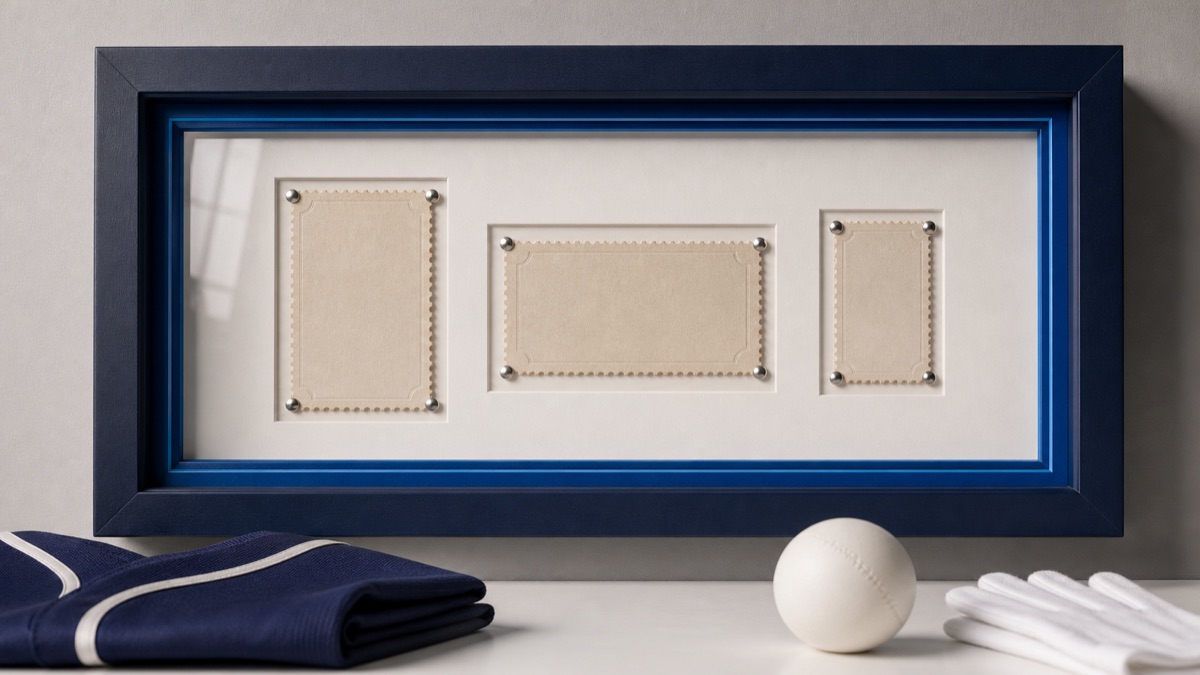
Display tickets by protecting them from light, heat, humidity, pressure, and bad adhesives. The best frame makes the ticket easy to enjoy while keeping every mounting choice reversible.
A ticket is small, but it is still paper. Treat it like an archival object first and a decoration second, especially if it is tied to a major game, debut, championship, or family memory.
Start with archival ticket framing basics
Before picking a frame, decide whether the ticket should be raw, sleeved, or slabbed. Raw paper gives the cleanest design look, but it also needs careful support. A slab protects the ticket from handling and creates a uniform display format, though it changes the visual style.
The rule we use is simple: nothing permanent touches the ticket. No household tape, glue dots, spray adhesive, rubber cement, or pressure-sensitive labels. Those materials can stain, pull fibers, and make future conservation harder.
A good frame should also be sized for the object, not forced around a pre-made opening. Tiny tickets can look lost in a large mat, while oversized season-ticket stock may need more breathing room than a standard photo frame gives it.
If you are framing more than one kind of collectible, our broader how to display your collection guide will help with shelves, walls, rotation, and room planning. Tickets just need an extra level of caution because they are thin and easy to damage.
UV glass and light protection for ticket displays
Light damage is cumulative. A ticket that sits in direct sunlight can fade, yellow, or become brittle, and the damage is not something a cleaner or holder can reverse. That is why the location matters as much as the frame.
Use UV-filtering glazing when a ticket will be displayed for more than a short period. Many framers offer UV glass or acrylic options. Acrylic is lighter and less likely to shatter; glass can resist scratching better. The right choice depends on frame size, budget, handling, and where the piece will hang.
Ask the framer what level of UV filtering the glazing provides and whether the spacer or mat keeps the ticket away from the surface. Those two details are easy to skip, and both matter when paper will stay framed for years.
Even with UV protection, avoid windows, hot walls, damp basements, and bright display lamps. Rotation is smart for important pieces. Display a ticket for a season, then return it to dark archival storage and put another piece in its place.
Acid-free matting and float mounts
Acid-free matting keeps the ticket away from harmful board and creates space between the paper and glazing. The ticket should not be pressed hard against glass, especially in a room where temperature changes can create moisture problems.
Float mounting can look excellent because the full edges remain visible. The mounting method matters. A trained framer can use archival corners, edge strips, or reversible hinges that support the ticket without covering key design details. For fragile or valuable tickets, we prefer corner or strip support over adhesive on the back.
Full tickets, stubs, and irregularly torn pieces need different approaches. A stub with a rough gate tear may look best floated so the edge tells its story. A full ticket with strong graphics may look better matted with a clean window. Let the paper decide the layout.
- Use acid-free mat board: both front mat and backing should be safe for paper.
- Keep mounting reversible: future owners should be able to remove the ticket cleanly.
- Support the whole piece: do not let a ticket sag from one point inside the frame.
- Avoid tight pressure: paper needs a little breathing room behind the glazing.
Pairing tickets with photos, cards, and programs
A ticket often displays best when it has context. A game photo, player card, program cover, lineup card copy, or small caption plate can help the viewer understand why the ticket matters. The goal is context, not clutter.
If you pair a ticket with cards, avoid letting the card holder press into the paper. Use separate openings or a layout that gives every object its own support. Slabbed cards and slabbed tickets can work well together because their holders create similar depth, but raw paper next to a thick slab needs careful spacing.
Keep captions short and factual. A date, opponent, venue, and reason the event matters will do more than a long story crammed into the frame.
Programs and guides can be displayed with tickets too, but do not frame a thick program in a way that stresses the spine. For season programs and guides, our media guide collecting article covers storage and condition issues before you build a wall piece.
Common questions about displaying tickets
Should valuable tickets be framed or kept in a box? It depends on priority. Display gives daily enjoyment; dark storage gives better long-term preservation. For the most important paper, rotation is often the best compromise.
Can you frame a graded ticket slab? Yes. Use a mount or shadow box that supports the holder without squeezing it. If you like slabbed presentation, compare examples with other graded slabs and choose a frame depth that fits the holder cleanly.
Is regular picture framing good enough? Sometimes for inexpensive keepsakes, but not for important collectibles. At minimum, ask for UV protection, acid-free materials, and reversible mounting. The same preservation logic appears in our UV protection framing and cases guide.
Ready to hunt?
Sports cards and collectibles — documented and carefully presented.