How to Sell Your Sports Cards: Auctions, Fixed Price, or Dealer?
July 2, 2026 · 7 min read · By BGLAD
Every collection eventually meets a decision: sell a card to fund the next one, trim a collecting lane, or move an inherited box of cardboard someone swears is valuable. Selling well is a skill — the gap between a rushed sale and a well-executed one is routinely 20–40% of the price.
Here's how to figure out what you have, pick the right selling channel, and get paid without surprises.
Step one: know what you actually have
Value your cards before anyone else offers to. The tools are free: search completed/sold listings for your exact card — same set, same parallel, same grade — and let real transactions set your expectations. Sold prices are the market; asking prices are wishes.
Three sorting questions do most of the work: Is it graded (a slab with a cert number prices itself)? Is it scarce (serial numbering, key rookies, vintage stars)? Is the player relevant (Hall of Famers and current stars carry demand; 1991 commons, whatever their sentimental value, do not — the junk wax lesson from our market overview applies double when selling).
For raw cards with real value, consider whether grading first raises the net — our grading math guide walks through exactly that decision.
Auctions: let the market decide
Auctions shine when demand is strong or the true price is uncertain: hot rookies, scarce parallels, iconic vintage, fresh-to-market pieces. Competitive bidding discovers prices no fixed listing would dare ask — and the format creates urgency that fixed prices can't.
The trade-offs: outcomes vary with timing and audience, and a soft auction can underperform. Mitigate with good photos, complete descriptions (cert numbers included), and scheduling that ends when your buyers are awake and paid. Reserve prices protect a floor where offered. Reviewing completed sales in your card's category before consigning is one of the cheapest ways to learn.
Fixed price: control and patience
Fixed-price ("buy now") selling gives you control: you set the number, the card waits for its buyer. It suits cards with well-established comps, mid-tier value, or thin-but-steady demand. The cost is time — overpriced listings sit for months — and the discipline it takes to reprice when the market moves without you.
A practical hybrid many sellers use: fixed price with best-offer enabled, priced slightly above the comps, letting negotiation close the gap.
Consignment and dealers: speed vs. maximum dollar
Consignment hands your cards to a professional seller — an auction house or storefront — who markets them to an audience you don't have, for a percentage. For high-value cards, consignment frequently nets MORE than self-selling despite the fee, because the right audience bids harder. Vet the consigner's track record, fee schedule, and payout terms first.
Selling to a dealer is the speed option: instant, guaranteed, zero effort — at wholesale. A dealer must resell at a profit, so expect offers meaningfully below retail comps. That's not a rip-off; it's the price of immediacy. It's the right call for bulk, for estates, and for anyone who values done over maximized.
Closing the deal: presentation, shipping, taxes
However you sell, the last mile matters:
- Photograph like a buyer. Sharp, well-lit, front and back, slab labels legible. Great photos are the highest-ROI minutes in selling.
- Describe honestly. Disclose flaws; surprises come back as returns and disputes.
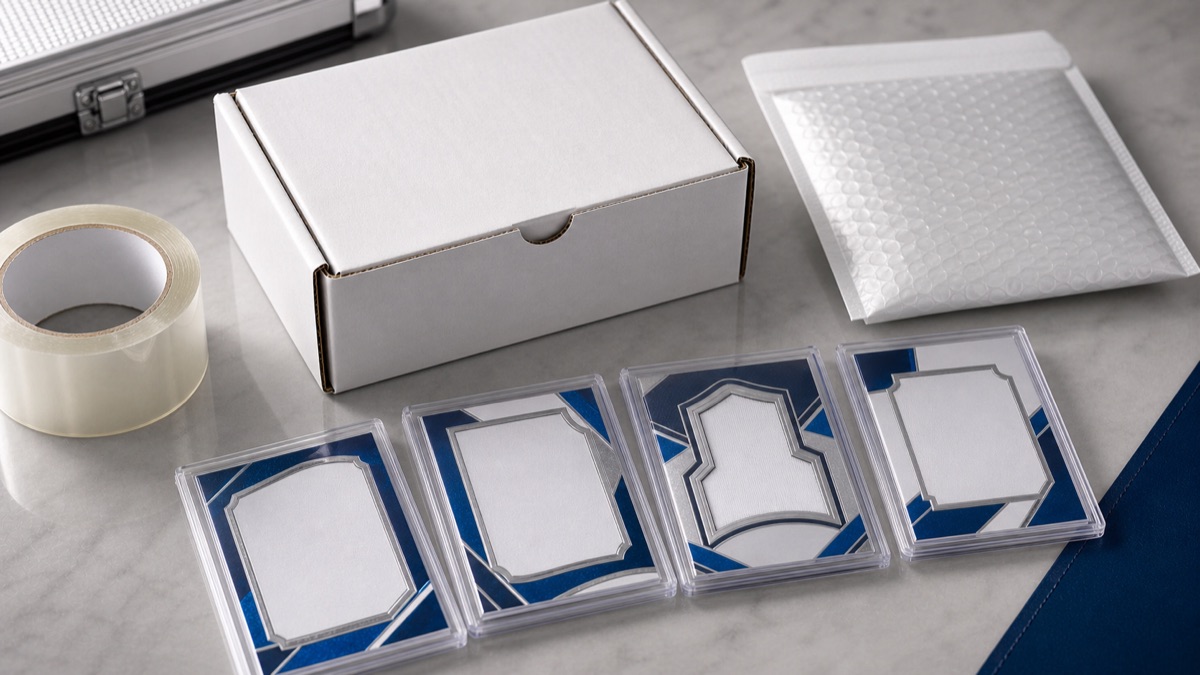
- Ship like it's yours. Sleeve, rigid holder, cardboard sandwich, tracking — insurance and signature on anything meaningful. Full method in our storage and shipping guide.
- Keep records. Sales may be taxable; purchase-price documentation determines your actual gain. A simple spreadsheet saves real money at tax time.
Ready to hunt?
Sports cards and collectibles — documented and carefully presented.