Card Parallels Explained: Inserts, Numbered Cards & 1/1s
July 9, 2026 · 6 min read · By BGLAD
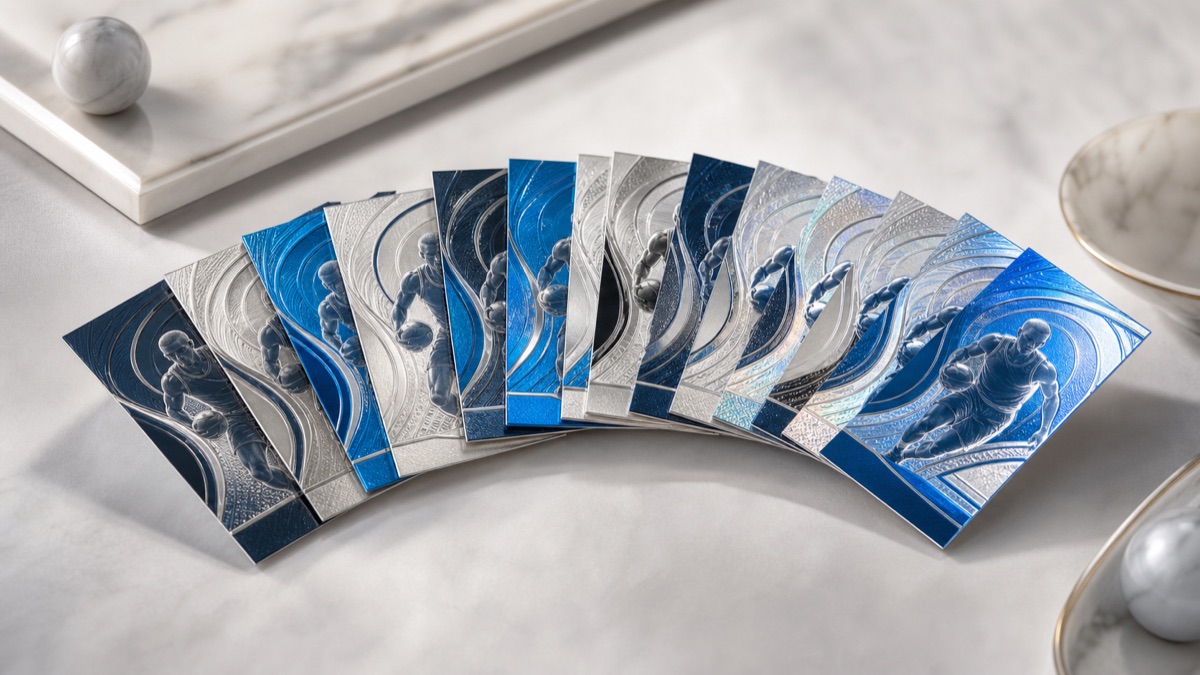
Card parallels explained simply: a base card is the standard version, a parallel is a modified version of that card, an insert is usually a separate themed card, and a numbered card has a stamped serial number showing its stated print run. Once you can separate those ideas, product checklists and pack pulls make much more sense.
The tricky part is that modern cards can stack these traits. A card can be an insert parallel, a numbered autograph, or a one-of-one version of a base design. The label matters because collectors compare rarity, demand, and condition differently for each type.
Base cards vs parallels in a sports card set
The base set is the main checklist of a product. Base cards usually share a consistent design, checklist numbering system, and general look. They are the standard version most collectors use when building a set or identifying the core card.
A parallel usually starts with that same base card and changes one or more visual or production features. The change might be a color, border, foil pattern, refractor finish, background texture, serial number, or special stamp. The player, photo, card number, and layout often remain close enough that you can tell it belongs to the same card family.
- Base: the standard version from the main checklist.
- Color parallel: a version using a different border, foil, or accent color.
- Pattern parallel: a version with a visible design effect such as wave, cracked ice, sparkle, or similar texture.
- Refractor or prism finish: a reflective finish that changes under light.
- Retail or hobby parallel: a version tied to a product format or distribution channel.
- Team, logo, or event stamp: a parallel-style treatment created with an added stamp or mark.
Inserts, subsets, and how they differ from parallels
An insert is usually a separate themed card placed within a product. Inserts may celebrate award winners, rookies, stars, records, teams, throwback designs, case-hit themes, or special photography. They often have their own design language and checklist separate from the base set.
A subset can feel similar, but the term is used in different ways depending on the product. Some subsets are part of the main checklist. Others behave more like inserts. When the distinction matters, the product checklist is the best source.
This is why the phrase insert parallel exists. A product may have a themed insert, then create color or numbered versions of that insert. If you want the broader hobby vocabulary while sorting, keep our sports card terminology glossary nearby.
- Insert: separate themed card inside the product.
- Insert set: the full checklist of that insert theme.
- Case hit: a hobby term for an especially tough pull, often expected at low frequency but defined by the product.
- Short print insert: an insert distributed in lower quantity or tougher odds than common inserts.
- Insert parallel: a rarer version of an insert, usually with a different finish, color, or numbering.
Numbered cards, serial numbers, and 1/1 cards
A numbered card has a serial number stamped or printed on it, usually written like 14/99 or 2/10. The second number is the stated size of that version's run. The first number is that individual card's place within the run. A card numbered 14/99 does not mean fourteen copies exist; it means that card is copy fourteen out of ninety-nine for that version.
A 1/1 is a one-of-one version. In plain terms, only one copy of that exact card version is intended to exist. One-of-ones can be printing plates, superfractors, unique patches, special foil versions, or other product-specific treatments. They can be exciting, but demand still depends on player, brand, design, condition, and collector interest.
Serial numbering is useful, but it is not the only form of rarity. Some short prints are not numbered. Some numbered cards are easier to find than a famous unnumbered insert because demand and distribution both matter.
- /999, /499, /299: often broader numbered tiers, depending on the product.
- /99, /75, /50: commonly viewed as more limited mid-tier parallels.
- /25, /10, /5: low-numbered territory where condition and demand become very card-specific.
- 1/1: the only copy of that exact version.
- Jersey number match: a serial number matching the player's jersey number; some collectors pay extra, but it is preference-driven.
How rarity tiers work without overthinking the odds
Rarity tiers are usually built from a ladder: base, common parallels, tougher parallels, numbered cards, low-numbered cards, and one-of-ones. Inserts may have their own ladder. Autographs and memorabilia cards may have another. The product checklist is the map; pack odds and serial numbers are clues.
Do not assume that lower print run always means better card for your collection. A rare parallel of a player you do not collect may matter less to you than a base rookie of someone you do. For value research, rarity is only one part of the picture. Player demand, set popularity, condition, and liquidity all matter, as covered in what drives a sports card's value.
- Start with the checklist: confirm whether the card is base, insert, variation, or parallel.
- Look for a serial stamp: check front and back, especially lower corners and foil areas.
- Compare the finish: tilt the card under light to see color, shine, texture, and patterns.
- Check card numbering: inserts and subsets often use different numbering prefixes.
- Read pack odds carefully: odds describe pulls from a product format, not guaranteed value.
How to tell what card you pulled
When you pull a card that looks different, slow down before labeling it. Put it in a sleeve, keep the wrapper or box nearby, and compare it to the checklist. Search by player name, set name, card number, color, insert title, and serial number. If the card has unusual shine or texture, describe what you see instead of guessing the official name.
Condition still matters even when the pull is rare. Check centering, corners, edges, and surface before you decide whether to grade, sell, trade, or keep it. Our guide to sports card condition basics explains how to inspect those areas at home.
If you prefer opening product yourself, browse our sealed boxes and match the product format to the experience you want. If you want a specific parallel, buying the single is often the more controlled route.
- Sleeve it first: protect the card before research.
- Identify the product: brand, set, year, sport, and format matter.
- Find the card number: it is often the fastest path to the checklist.
- Match the design: compare base, insert, and parallel images carefully.
- Confirm the serial number: note both the copy number and the print run.
- Use sold comps later: identify the card first, then research market context.
Common questions about card parallels explained
Are parallels always more valuable than base cards? Not always. A parallel is usually rarer than the base version, but value also depends on player, set, demand, condition, and how many collectors care about that exact version.
Is every numbered card a parallel? Many numbered cards are parallels, but not all. Some inserts, autographs, memorabilia cards, and special subsets are numbered as their own card type.
Should beginners chase rainbows? Rainbows can be fun because progress is visible, but define a realistic stopping point before starting. The rarest end of a rainbow can be expensive, unavailable, or locked in another collector's PC for a long time.
Ready to hunt?
Sports cards and collectibles — documented and carefully presented.