How to Open Hobby Boxes the Right Way
July 9, 2026 · 6 min read · By BGLAD
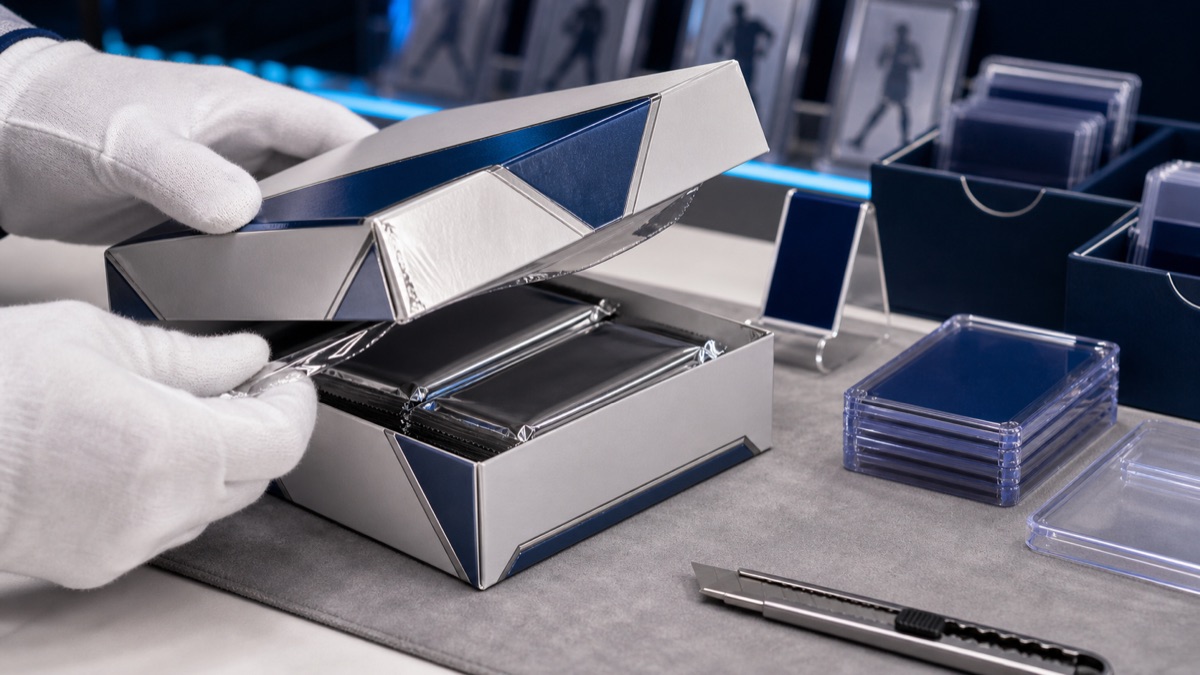
How to open hobby boxes the right way starts with a clean setup, careful pack handling, and protection ready before the first wrapper comes off. The goal is simple: enjoy the rip without adding avoidable corner, edge, or surface damage.
A hobby box can move fast when the cards look good, but slowing down pays off. We like to prepare sleeves, top loaders, team bags, a sorting area, and a place for wrappers or box panels before opening anything.
Set up before opening a hobby box
A good rip starts with the surface. Use a clean table with enough room for unopened packs, base cards, inserts, hits, wrappers, and supplies. Wipe the area first and keep food, drinks, loose tape, and sharp tools away from the cards.
Have penny sleeves, top loaders, card savers, team bags, and a microfiber cloth nearby. If the product includes thick cards, patches, or premium stock, make sure you have thicker top loaders or one-touch holders that actually fit. Forcing a thick card into the wrong holder can damage edges.
Before you open the box, take a moment to read the format. Know the pack count, cards per pack, stated hits, and any box-only parallels. If you are still deciding what kind of sealed product fits you, our hobby vs retail boxes guide explains the format differences.
- Clean table: enough room to separate cards without stacking too high.
- Soft lighting: bright enough to see corners and surfaces without glare.
- Sleeves: standard and thick sleeves if the product may include memorabilia cards.
- Top loaders or card savers: matched to the card thickness.
- Sorting space: separate piles for base, rookies, inserts, parallels, and hits.
Careful pack opening technique
Open packs from the seam when possible and keep pressure away from the card corners. Do not bend the pack to force it open. If a wrapper is stubborn, use small, controlled pressure near the top edge and keep the cards settled below your hands.
Avoid scissors unless you are very sure where the cards sit inside the wrapper. Even then, cutting packs is risky because cards can shift. If you do use a blade on outer shrink wrap, cut lightly along the box seam, not toward the cards or inner packs.
Once the cards are out, hold them by the edges. Slide slowly, especially with chromium cards, dark borders, foil surfaces, and thicker stock. Surface scratches and corner taps can happen before a card ever reaches a sleeve.
- Open at the seam: pull the wrapper, not the cards.
- Keep cards square: avoid twisting or flexing the stack.
- Hold edges only: fingerprints and pressure marks can show on glossy surfaces.
- Do not rush stuck packs: stubborn wrappers are where damage usually happens.
- Set wrappers aside: do not let loose foil scrape card surfaces.
Protect hits immediately after the pull
When you pull a hit, sleeve it before you celebrate too long. A hit might be an autograph, relic, numbered card, short print, rare insert, strong rookie, or a card that matters to your PC. The label is less important than the habit: protect first, evaluate second.
Use the right sleeve size. For thicker cards, gently open the sleeve mouth or use a sleeve designed for thick stock. Never push a patch card into a tight sleeve. For top loaders, match thickness and leave the card loose enough that the edges are not pinched.
Condition still matters on big pulls. After the card is protected, inspect centering, corners, edges, and surface under good light. Our guide to sports card condition basics walks through those areas without assuming every pack-fresh card is mint.
- Sleeve first: protect the card before researching or photographing it.
- Use proper thickness: thick cards need thicker holders.
- Avoid bare stacking: do not place hits in a raw pile.
- Label later: identify the exact parallel or variation after protection.
- Photograph cleanly: take photos after dust, glare, and fingerprints are controlled.
Sort cards as you rip
Sorting during the rip saves work later and helps you notice patterns. Keep base cards in one area, rookies in another, inserts and parallels in another, and protected hits off to the side. If a product has codes, image variations, or short prints, leave uncertain cards in a review pile.
Do not rely only on memory. Check the card number, back text, finish, serial stamp, and checklist role. A card that looks ordinary at first may be a photo variation or short print. A shiny card may be a common parallel rather than a major hit.
Checklists are the roadmap for this work. Our article on sports card sets and checklists explains how base sets, subsets, inserts, and checklist numbering help you identify what came out of the box.
- Base stack: standard cards from the main set.
- Rookie stack: rookies and prospect cards you want to review.
- Insert stack: themed cards outside the main base flow.
- Parallel stack: color, foil, pattern, refractor, or numbered versions.
- Review stack: anything that might be a variation, short print, or odd pull.
When to keep wrappers, boxes, and receipts
Most wrappers are not valuable by themselves, but packaging can matter while you are identifying cards or resolving a manufacturer issue. Keep the box, wrapper odds, pack wrappers, and receipt at least until you confirm the box delivered what it was supposed to deliver.
The odds panel can help you identify formats and possible pulls. The box can also confirm whether a card came from hobby, jumbo, retail, choice, or another configuration. That context matters when a parallel is format-exclusive.
If you pull a redemption, damaged hit, missing stated hit, or unusual error, save the packaging. Manufacturer policies vary, and the box code, wrapper, and proof of purchase may be requested. For normal rips, once the cards are identified and sorted, most collectors do not need to keep every wrapper.
Common questions about how to open hobby boxes
Should you wear gloves when opening cards? Usually no. Clean, dry hands give better control than loose gloves. Gloves can catch corners or make slick cards harder to handle. Wash and dry your hands, then hold cards by the edges.
Should you record the rip? Recording can help if a box has a missing hit or damaged card, and it is useful if you share breaks. For personal ripping, it is optional. If you record, set the camera before opening so you are not moving cards around mid-pack.
Is opening sealed product better than buying singles? It depends on the goal. Opening sealed boxes gives you the experience and chance at surprise pulls. Buying singles is usually the more controlled path when you want one specific card.
Ready to hunt?
Sports cards and collectibles — documented and carefully presented.