Price Sports Cards to Actually Sell
July 9, 2026 · 5 min read · By BGLAD
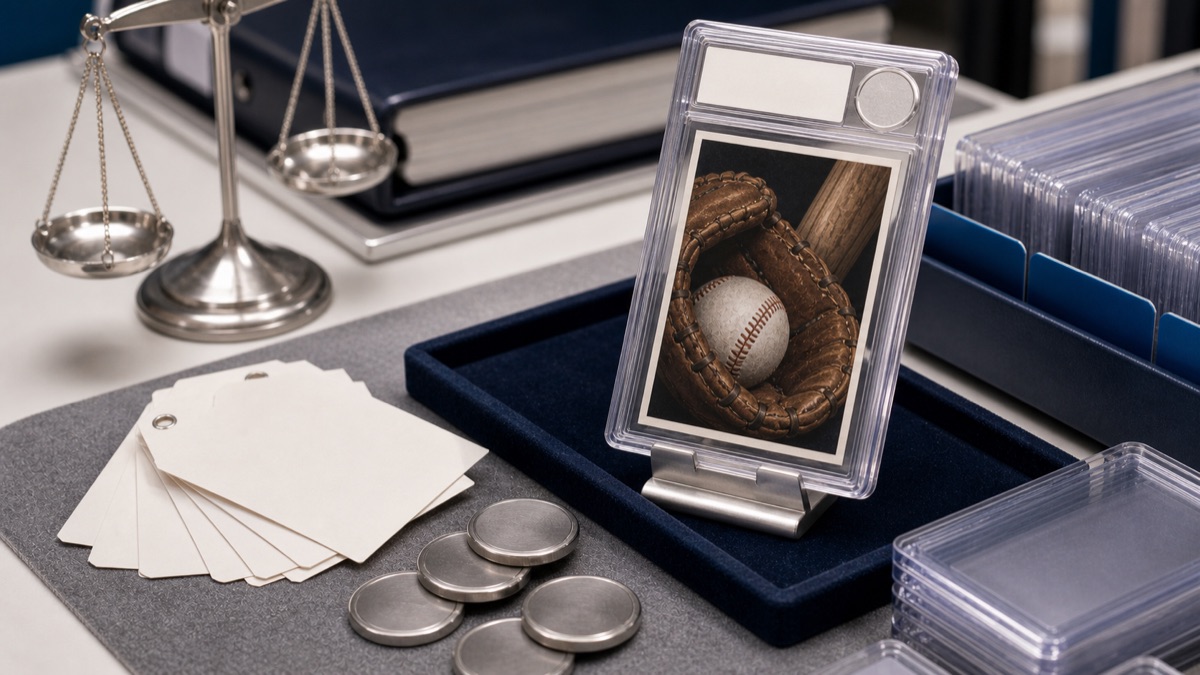
To price sports cards so they actually sell, use recent comparable sales, adjust for condition and liquidity, and choose a listing strategy that matches how quickly you want the card gone. The right price is not the highest ask online; it is the number a real buyer will accept for your specific copy.
Most pricing mistakes come from comparing the wrong cards. A different grade, parallel, photo quality, selling venue, or condition problem can make a comp look relevant when it is not.
Read sports card comps correctly
Start with sold results, not active listings. Active listings show what sellers hope to get. Sold comps show where buyers have actually agreed. Even then, one sale is not a market. Look for a cluster of recent, similar sales before you decide where your card belongs.
A good comp matches the player, year, set, card number, parallel, serial number range if relevant, autograph or relic status, grade, grading company, and condition. If one of those pieces changes, the comp may still help, but it needs an adjustment.
Our guide to tracking sports card prices covers the habit in more detail. The short version is simple: save the comps you used, note why they matched, and avoid using the single highest sale as your normal expectation.
- Prefer recent sold listings over active asking prices.
- Match the exact card before using broader set or player comps.
- Separate auction results from fixed-price results.
- Ignore outliers unless you can explain why they happened.
Condition honesty when pricing raw cards
Raw cards need stricter honesty because the buyer is taking grading and condition risk. If your card has a soft corner, whitening, a print line, a surface dimple, wax stain, crease, or centering issue, price it like the flawed copy it is. Photos should show the same story your description tells.
The phrase "looks mint" does not carry much weight if the pictures show a corner touch. Buyers know the difference between a raw card that might grade well and a raw card being described optimistically. Honest condition notes can reduce messages, returns, and stale listings.
If the card is already graded, compare it to the same grade and company when possible. Grade premiums are not universal. Our article on graded vs raw price gaps explains why some cards deserve a large slab premium while others barely move.
- Centering: strong or weak compared with the card's normal look.
- Corners and edges: any whitening, dings, chips, or rough cuts.
- Surface: scratches, dents, print lines, dimples, stains, or gloss loss.
- Back condition: paper loss, writing, wax, gum, residue, or chipping.
Pricing psychology that respects buyers
Pricing psychology should make the decision easier, not trick the buyer. A clean number slightly below the next common comp can move a liquid card. A firm premium can work when your copy has better centering, better eye appeal, stronger photos, or a more trusted holder.
Leave room for offers only if you actually want offers. If you list far above market and plan to negotiate down, many buyers will never start the conversation. If you price near the real number, you may get fewer messages but better ones.
Think about the type of buyer. Set builders may sort by lowest price. Player collectors may pay for eye appeal. Investors may focus on liquidity. Vintage buyers may care about originality and presentation. Your pricing should match the audience most likely to want that exact card.
Manage stale sports card listings
A stale listing is feedback. It may mean the price is high, photos are weak, title keywords are missing, shipping feels risky, the market cooled, or buyers simply are not searching for that card right now. Do not let a listing sit forever just because it once felt right.
Set review dates. After a reasonable window, check new comps and decide whether to lower the price, improve photos, change the title, add condition detail, move the card to auction, bundle it, or keep it for a better selling window. The worst habit is ignoring new evidence.
If you want help deciding whether to sell directly, consign, or move a collection, our sell and consign page lays out the paths we use with local collectors. For a broader selling framework, see our article on how to sell sports cards.
- Review older listings on a schedule.
- Update prices when new sold comps change the range.
- Retake photos if glare, blur, or cropping hides condition.
- End and relist only when the listing itself is part of the problem.
Choose fixed price, offer, or auction
Fixed price works well when comps are clear and you are willing to wait for the right buyer. Best offer helps when the range is real but not exact. Auction can work when demand is broad enough for bidders to find the card and compete.
Do not use an auction just because you are unsure. Thinly traded cards can end low if the right buyers miss the listing. For rare cards, a strong fixed price with good photos may be better than forcing a seven-day market test.
Also consider fees, shipping, taxes, and time. A higher headline sale on one venue may not be better after costs. Net price matters more than the number printed at the top of the listing.
Common questions about how to price sports cards
Should you price above comps to leave room? Sometimes, but not by default. A small cushion for offers can be fine. A large gap above recent sales usually makes the card invisible to serious buyers.
How much should condition change the price? It depends on the card, but condition should always change the price when buyers can see the flaw. For grade-sensitive modern cards, even a small issue can move the card into a different buyer pool.
When should you lower the price? Lower it when fresh comps are lower, your listing gets views without serious interest, or your reason for selling is speed. If the card is genuinely scarce, you can wait longer, but waiting is a choice with a cost.
Ready to hunt?
Sports cards and collectibles — documented and carefully presented.