Catalog Card Collection: Sorting Systems That Last
July 9, 2026 · 6 min read · By BGLAD
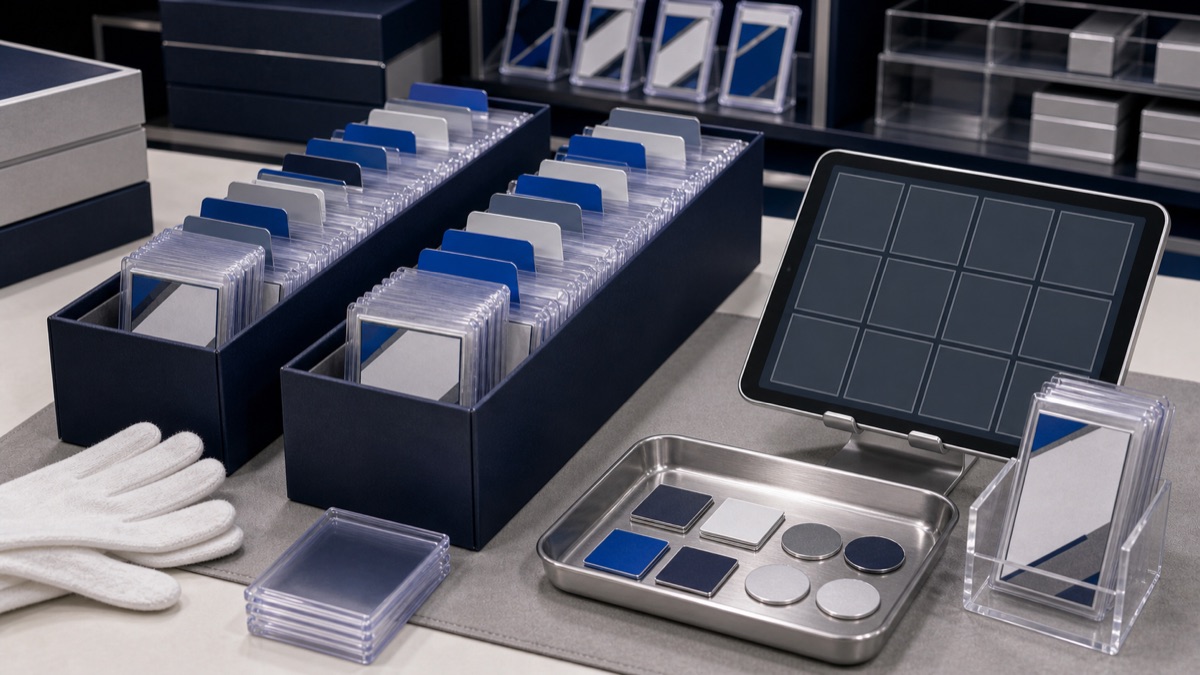
To catalog card collection boxes without burning out, choose one primary sorting system, record only the details you will actually use, and keep the process easy enough to maintain after new purchases. A simple spreadsheet, labeled boxes, and a consistent routine beat an elaborate system you abandon in two weeks.
The goal is not to turn collecting into office work. The goal is to find your cards, understand what you own, avoid duplicate buying, and make better decisions when you trade, sell, grade, or insure part of the collection.
Choose a sorting system before entering data
Sorting comes before cataloging because the physical system has to match the way you think. If you collect one player, player-first sorting is natural. If you build sets, set-first sorting is cleaner. If you buy and sell regularly, value tiers may matter more than team or year.
Do not try to use every system at once in the boxes. Pick one primary system for storage, then use your catalog to add the other labels. A spreadsheet can filter by team, player, set, or value, but a physical box can only be in one order at a time.
- Player: best for player PCs, stars, rookies, and autograph collections.
- Team: useful for hometown collectors, shop boxes, and trade nights.
- Set and year: best for set builders and collectors who care about checklists.
- Sport and era: helpful when collections span multiple decades or leagues.
- Value tier: practical for selling, grading candidates, and security planning.
Inventory basics for sports card collections
A good inventory should answer basic questions quickly: what is the card, where is it, what condition is it in, and what did you pay? You do not need museum-level records for every common. You need enough information to make the next decision easier.
For most collectors, the core fields are year, brand, set, player, card number, variation or parallel, serial number if any, condition notes, storage location, purchase price, date acquired, and an estimated value range. Photos are useful for better cards, but photographing every low-value card can stall the whole project.
If condition and storage are your weak points, pair the inventory with our card storage and protection guide. Cataloging a card while leaving it loose in a box does not solve the real problem.
- Identity: year, brand, set, player, team, and card number.
- Version: base, insert, parallel, autograph, relic, serial number, or variation.
- Condition: quick notes such as clean, corner wear, surface line, or off-center.
- Location: box number, binder, display case, slab box, or safe.
- Money: purchase price, date, source, and rough current value when relevant.
When a spreadsheet beats a collection app
Collection apps can be convenient, especially when they scan cards, estimate values, or sync across devices. The problem is that app databases are not perfect, and the more specific the card gets, the more you still need to verify the exact version. If the app misidentifies a parallel, the speed can create a new mess.
A spreadsheet wins when you want control. You decide the fields, naming rules, locations, and notes. You can export the data, filter it, back it up, and keep using it even if a service changes. For many collectors, a spreadsheet is also faster for bulk entry once the columns are set.
That does not mean apps are bad. Use an app if it genuinely saves time, then keep your own backup for important cards. Our guide to digital collection tracking goes deeper on matching the tool to the size and purpose of the collection.
- Use a spreadsheet for: custom fields, bulk edits, insurance lists, and sell piles.
- Use an app for: quick scans, mobile access, image matching, and casual browsing.
- Use both for: higher-value collections where convenience and ownership both matter.
- Avoid relying on: automatic values without checking real sold comps.
- Back up often: your catalog is part of the collection once you depend on it.
Build a maintainable catalog routine
The system has to survive normal collecting behavior. New cards come in. Trades happen. A grading order leaves the house. A box gets moved. If updating the catalog takes too long, the records fall behind and stop being trusted.
We like a simple intake routine: new cards go into one tray or box, better cards get sleeved immediately, and nothing joins the main collection until it is sorted and logged. That creates a small bottleneck on purpose. It keeps unprocessed purchases from spreading across the room.
For active sellers, add one more status field: keep, grade, trade, sell, or review. If you decide a stack is ready to move, our sell or consign with us page is a natural next step once the cards are identified and grouped.
- Process weekly: small sessions beat annual rescue projects.
- Use box labels: match physical labels to catalog locations.
- Create an intake area: keep new cards separate until recorded.
- Batch similar cards: enter one set, team, or player at a time.
- Review high-value cards: update only the items where value changes matter.
Keep value tracking useful but not obsessive
Trying to price every card every week will wear you out. Most collections have a small group of cards where value truly matters and a large group where exact pricing is not worth constant attention. Separate those groups in the catalog.
For the value tier, use ranges instead of false precision. A card might be under $5, $5-$25, $25-$100, or review individually. Higher-value cards deserve better photos, source notes, and periodic market checks. Lower-value cards may only need identity and location.
When a card does need updated pricing, use sold listings and comparable cards rather than current asking prices alone. Our sports card price tracking guide explains how to read comps without turning one outlier sale into the new baseline.
Common questions about cataloging a card collection
Do I need to catalog every card? No. Catalog the cards where identification, value, location, or decision-making matters. Bulk commons can be grouped by set, team, or box unless you have a reason to list every copy.
What is the best way to start a messy collection? Pull out the obvious value cards first, protect them, then sort the remaining cards into broad groups. Detailed cataloging is easier after the piles make sense.
Should I sort before or after pricing? Sort and identify first. Pricing an unidentified stack wastes time because small differences in year, parallel, condition, or card number can change the answer.
Ready to hunt?
Sports cards and collectibles — documented and carefully presented.