Junk Wax Era: Lessons for Today's Collector
July 9, 2026 · 5 min read · By BGLAD
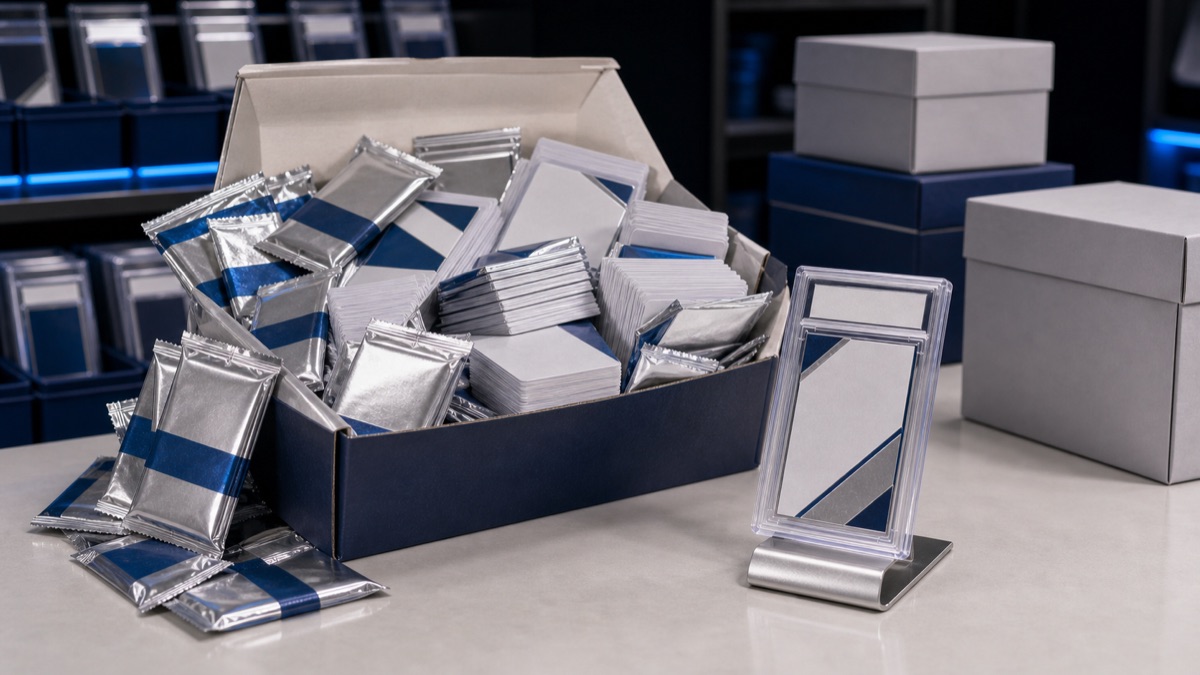
The junk wax era refers to the late 1980s and early 1990s period when many sports cards were produced in huge quantities and saved by the box, pack, and set. The lesson for today's collector is simple: demand matters, but supply can overwhelm demand when scarcity is assumed instead of proven.
We are not against cards from that era. Many collectors love them because they are nostalgic, affordable, and full of memorable players. The mistake is treating every old card as rare just because it has aged.
What the junk wax era means in sports cards
Junk wax is hobby shorthand for an overproduced period, not a verdict on every card from those years. The phrase usually points to mass-produced baseball, basketball, football, and hockey cards from the late 1980s and early 1990s, when packs were widely available and many people believed unopened boxes and complete sets would become future treasure.
The market later learned that condition and player demand were not enough when supply was enormous. If thousands of collectors saved the same product carefully, then unopened boxes, complete sets, and star cards could remain easy to find decades later. Scarcity was the missing ingredient.
That history matters because the same pattern can appear in modern products. A product can feel exciting at release, sell quickly, and still fail to hold long-term value if too many similar cards chase the same buyer base.
- A card can be old without being scarce.
- A famous player can have cards that are easy to replace.
- A sealed box can be nostalgic without being rare.
- A short-term buying rush does not prove lasting collector depth.
Overproduction and supply in card market cycles
Supply is not only the number printed. It is also the number that survived, the number that stayed sealed, the number graded, and the number available for sale at any given time. The junk wax era showed how a hobby can underestimate survival supply when people save products as investments.
Modern collecting has more visible scarcity tools: serial numbering, stated print runs in some products, short prints, parallels, autographs, and population reports. Those tools help, but they do not remove the need for judgment. A numbered card can still have many similar substitutes if the product line has dozens of colors, waves, inserts, and related releases.
We explain that supply issue in print runs and scarcity economics, because scarcity is strongest when it is both real and meaningful. A card numbered low but ignored by collectors may not behave like a key card with deep demand.
Hype, nostalgia, and sealed wax expectations
The junk wax story also warns us about confusing popularity with investment quality. A hot product can be fun to open. A rookie class can be exciting. A box can look like an easy hold. None of that proves that future buyers will pay a premium after more products release and attention moves on.
Sealed wax has its own logic. Boxes can become harder to find if they are opened over time, but they also compete with newer releases, changing player demand, and the amount of unopened product collectors already stored. The question is not whether sealed product can rise. The question is whether the specific box has lasting demand beyond the release window.
Collectors who enjoy sealed boxes should understand the difference between collecting, ripping, and speculating. Our guide to investing in sealed wax walks through those tradeoffs without pretending every unopened product deserves the same treatment.
How today's collectors can apply junk wax lessons
The practical lesson is to ask better supply questions. How many versions of this card exist? How often do they appear for sale? Is the player demand broad or narrow? Are collectors chasing this exact card, or would they be just as happy with several substitutes? Does the card have a clear reason to matter within the set?
Condition is still important, but condition alone cannot rescue unlimited supply. High-grade examples may separate themselves from average copies, especially when grading is strict or condition-sensitive. Still, a grade premium works best when buyers actually care about the card underneath the label.
If you collect modern cards, be especially careful with product fatigue. Too many releases can make collectors selective. That does not mean modern cards are bad. It means the strongest modern cards usually have a cleaner story: important player, important set, meaningful scarcity, trusted condition, and demand that lasts beyond the first wave.
Common questions about junk wax cards today
Are all junk wax era cards worthless? No. Some cards have strong player demand, condition sensitivity, error interest, autograph value, or nostalgic appeal. The point is that many cards from the era are common, so value depends on the exact card and condition.
Should beginners avoid junk wax? Not if they enjoy it. Junk wax can be an affordable way to learn sets, players, condition, and sorting. Beginners should just avoid assuming sealed boxes or childhood star cards are rare without checking sold comps and supply.
Can a modern product become the next junk wax? The exact market is different, but the lesson can repeat whenever production, parallels, and hype grow faster than lasting demand. If you are comparing eras, vintage vs modern cards and rookie hype and prospecting are useful next reads. You can also review current sealed box listings with supply discipline in mind.
Ready to hunt?
Sports cards and collectibles — documented and carefully presented.