PSA Grading Scale: 1 to Gem Mint 10 Explained
July 9, 2026 · 5 min read · By BGLAD
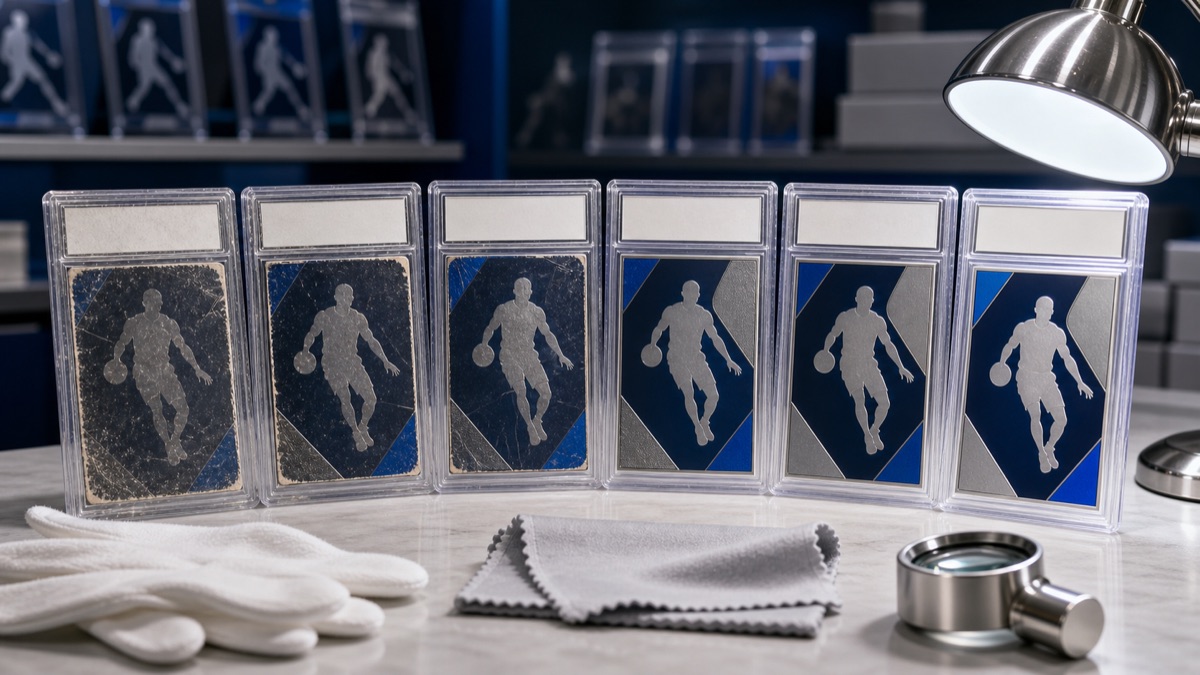
The PSA grading scale is a 1-to-10 condition scale used to describe a card's authenticity and physical state, with PSA 10 Gem Mint at the top. The number matters, but the card's eye appeal, issue, centering, and market demand still matter alongside the label.
We treat PSA grades as a common language, not a substitute for looking at the card. A label can make buying and selling easier, but it does not make every card with the same number equally attractive.
How PSA card grades read on a label
A PSA label usually gives the card identity, certification number, and grade. The grade appears as a number with a short condition name, such as PSA 8 Near Mint-Mint, PSA 9 Mint, or PSA 10 Gem Mint. That shorthand is what most collectors use when comparing listings.
The scale starts at PSA 1 Poor and rises through increasingly clean condition bands. PSA also uses half grades in many parts of the scale, so a card can land between two whole-number grades when it is stronger than one band but does not fully reach the next. You may see labels such as PSA 4.5, PSA 6.5, or PSA 8.5.
The label is only part of the story. Two PSA 7 cards can look different because one has stronger centering and another has better corners. PSA does not print card subgrades on the label, so collectors still have to inspect the card itself. If you want more context on subgrade thinking, read our guide to card grading subgrades.
Low-grade PSA cards from Poor to Very Good
The lower end of the PSA grading scale covers cards with obvious wear. PSA 1 Poor, PSA 2 Good, PSA 3 Very Good, and PSA 4 Very Good-Excellent can include heavy corner wear, surface problems, creases, staining, writing, paper loss, or other issues depending on the card and grade.
Low grade does not mean uncollectible. For vintage cards, pre-war issues, rare regional cards, and iconic rookies, a lower-grade PSA card can be the realistic way to own an authentic example. The question is whether the flaws are acceptable for the card, the price, and your collection goal.
Eye appeal matters heavily in this range. A technically similar grade can look much better or worse depending on centering, image clarity, crease placement, and overall cleanliness. We would rather own a lower-grade card we enjoy looking at than a slightly higher number with damage that dominates the card.
- PSA 1 to 2: heavy wear, major flaws, but still identifiable and collectible when the card matters.
- PSA 3 to 4: clear wear remains, but the card may present better if the image is clean and centered.
- PSA 5 to 6: mid-grade territory where vintage collectors often balance price, eye appeal, and scarcity.
- PSA 7 and up: condition sensitivity rises, and small flaws can change the price conversation quickly.
Mid-grade and high-grade PSA cards
PSA 5 Excellent and PSA 6 Excellent-Mint often describe cards with visible but controlled wear. These grades can be attractive for vintage collectors because the card may still look strong without carrying the premium of a near-mint example. For modern cards, the same grades usually signal a serious condition issue unless the card is scarce or important.
PSA 7 Near Mint and PSA 8 Near Mint-Mint are where many vintage cards start to feel visually sharp. Corners, edges, surface, and centering all become less forgiving. A PSA 8 vintage card with strong centering can draw more attention than a technically similar card with awkward borders.
PSA 9 Mint and PSA 10 Gem Mint are the top whole-number grades most modern collectors chase. The gap between them can be large because modern buyers often treat Gem Mint as the clean standard. Before paying that premium, compare recent sales, current supply, and your own tolerance for small visible flaws. Our graded slabs page is a practical place to compare how different grades present in real listings.
PSA half grades, qualifiers, and no-grade results
Half grades are useful because not every card fits neatly into a whole-number bucket. A PSA 6.5 may look clearly stronger than many PSA 6 examples while still falling short of PSA 7. The half point can help, but buyers should still compare the card's eye appeal to the price being asked.
PSA can also use qualifiers or return a card without a numeric grade in certain situations. Qualifiers and no-grade outcomes are their own topic, but the collector lesson is simple: read the full label and certification result, not just the biggest number. Marks, staining, miscuts, alterations, minimum-size issues, and authenticity concerns can all change the way a card should be valued.
For a deeper pass on that topic, our article on grade qualifiers explains how label notes can affect demand. If the concern is whether grading makes sense before you submit, start with is grading worth it and run the fee, shipping, and realistic-grade math first.
Common questions about the PSA grading scale
Is PSA 10 always perfect? No. PSA describes Gem Mint as virtually perfect, and the standard can allow very small manufacturing or printing imperfections if they do not hurt overall appeal. Collectors should still inspect centering, surface, and corners.
Is a PSA 9 a bad grade? Usually not. PSA 9 Mint is a strong grade, especially for older cards or condition-sensitive issues. The challenge is that some modern cards have a large price gap between PSA 9 and PSA 10, so the market may treat a 9 as less exciting even when the card looks excellent.
Is PSA the only grading company that matters? No. PSA has a major place in sports cards, but BGS, SGC, CGC, and others can make sense depending on the card and collector goal. Our guide to sports card grading companies compares those lanes without assuming one answer fits every card.
Ready to hunt?
Sports cards and collectibles — documented and carefully presented.