Ship Sports Cards Safely Without Overkill
July 9, 2026 · 5 min read · By BGLAD
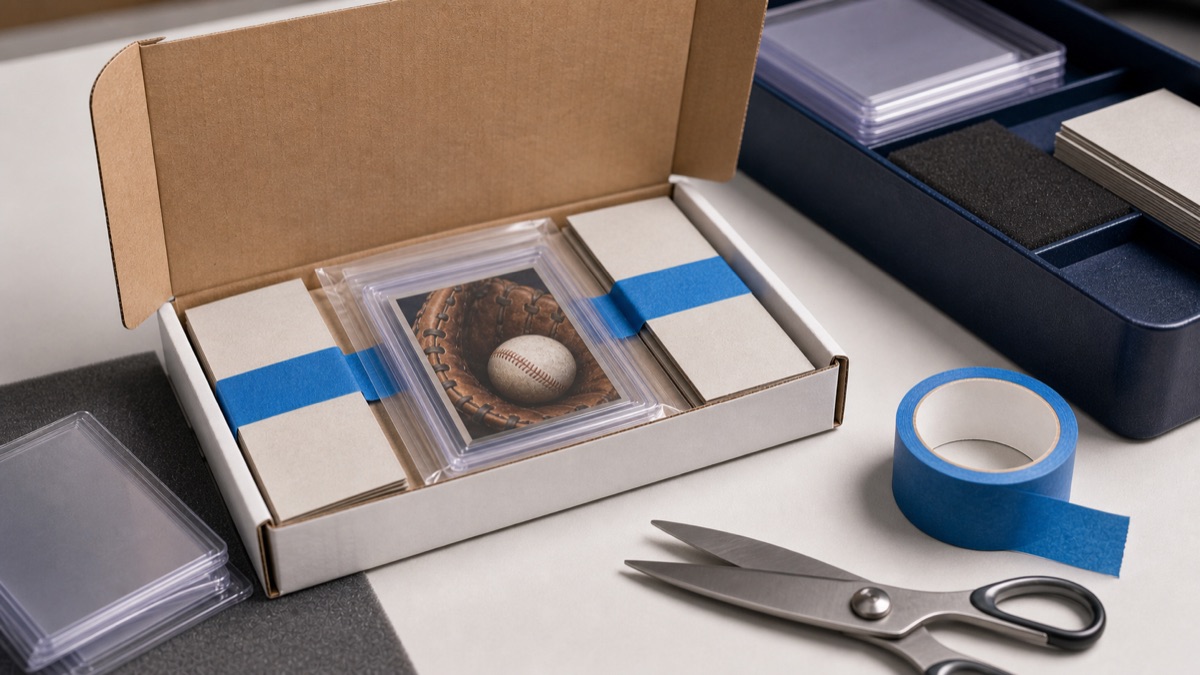
To ship sports cards safely, protect the card from surface rub, corner damage, bending, moisture, and movement inside the package. For most low-to-mid value singles, a penny sleeve, top loader or card saver, team bag, light cardboard support, and bubble mailer is enough.
The goal is not to build a brick around every card. The goal is to match the packaging to the card's value, fragility, and destination so the buyer receives the same card you sold.
Start with sports card shipping supplies that fit
A clean shipping routine starts before the label prints. Use the right size penny sleeve, then place the card in a rigid holder that does not pinch the corners. Top loaders work well for many raw singles, while semi-rigid card savers can be useful when the card needs a little flex without pressure.
Do not force thick patch cards, memorabilia cards, or bowed chrome cards into holders that are too tight. The wrong holder can create the very damage you were trying to prevent. For thicker cards, use the correct point-size holder and keep the card from sliding inside it.
Before packing, wipe dust from the outside of slabs or top loaders and check that no loose tape can touch the card. If storage has been a weak point, our guide to how to store and protect your collection covers the same supplies before they become shipping supplies.
- Sleeve the card first so the surface is not rubbing plastic directly.
- Use a top loader, semi-rigid holder, one-touch, or slab as the rigid layer.
- Add a team bag or resealable sleeve to keep the card from sliding out.
- Use painter's tape only on outside packaging, never on the card or sleeve.
- Keep the package snug, but not compressed.
Use team bags and bubble mailers the simple way
The penny sleeve to rigid holder to team bag pipeline works because each layer has a job. The sleeve protects the surface, the holder resists bending, and the team bag keeps the card from escaping the holder. Once that unit is secure, the mailer protects against bumps during handling.
For a single raw card in a top loader, we like to add light cardboard on one or both sides when the package still has room. The cardboard should be slightly larger than the holder and taped to itself, not to the card holder in a way the buyer has to fight. The buyer should be able to open the package without using a knife near the card.
A bubble mailer is usually the right outer package for standard singles and many slabs. Choose a mailer that leaves enough room for protection but not so much room that the card can slide from end to end. If you sell online often, compare how sellers present and package similar cards through our marketplace listings, then build a routine you can repeat.
Upgrade to a box, insurance, or signature when risk rises
Overkill starts when the packaging adds cost and hassle without reducing real risk. Underpacking starts when the card's value, thickness, or importance deserves more than a soft mailer. The decision point is usually value, replaceability, and how much movement the card would have inside a mailer.
Use a small box when the item is thick, the order includes several cards, the slab stack is heavy, or the card is important enough that crushing risk matters. Fill empty space with clean packing material so the inner bundle does not rattle. Boxes are also easier to use when you are sending sealed packs, graded cards in bulk, or mixed orders with supplies.
Insurance and signature confirmation are business decisions, not decorations. If losing the package would hurt, consider insurance. If the card is expensive enough that delivery disputes are a real concern, consider a signature service. Make the decision before listing so shipping cost does not surprise you after the sale. Our how to sell your sports cards guide takes the same all-in view of selling costs.
- Use a box for thick cards, multiple slabs, high-value orders, or awkward bundles.
- Add insurance when the loss would be painful to absorb.
- Consider signature confirmation when proof of handoff matters.
- Photograph the packed order for your own records on higher-value shipments.
- Match the service level to the promise in the listing.
Cover international card shipping basics before listing
International shipping adds customs forms, longer transit, more handoffs, and more buyer questions. That does not make it wrong, but it does mean the listing should be clear before someone across a border buys the card. Decide which countries you will ship to, which service you will use, and who is responsible for duties or import charges.
Describe the item accurately on customs forms. Do not mark a sold card as a gift to avoid fees, and do not guess at categories you do not understand. If the carrier asks for value, use the transaction value. Clean paperwork protects both sides and reduces delays.
Pack international orders with extra attention to moisture and movement. A team bag, cardboard support, bubble protection, and a snug outer package matter more when the card has more distance to travel. For the buying side of the same issue, our international buying and customs article explains why landed cost matters.
Common questions about mailing sports cards
Can you ship a cheap card in a plain envelope? Sometimes, but we do not like it for anything that would bother a buyer if it arrived bent or marked. Plain envelopes can work for very low-value cards when the buyer understands the risk and the service fits the platform rules, but rigid protection and tracking are cleaner for most sales.
Should you tape the top loader shut? Do not put strong tape directly across the top loader opening. It can leave residue, catch the sleeve, or make the buyer pull too hard. A team bag is cleaner, and a small pull tab on painter's tape is safer when tape is needed on outer supports.
How much packaging is too much? Packaging is too much when the buyer needs tools near the card, when the weight jumps for no reason, or when protection starts pressing on corners. Packaging is too little when the card can move, bend, get wet, or leave the holder during normal transit.
Ready to hunt?
Sports cards and collectibles — documented and carefully presented.