Championship Memorabilia: Rings, Trophies & Replicas
July 9, 2026 · 5 min read · By BGLAD
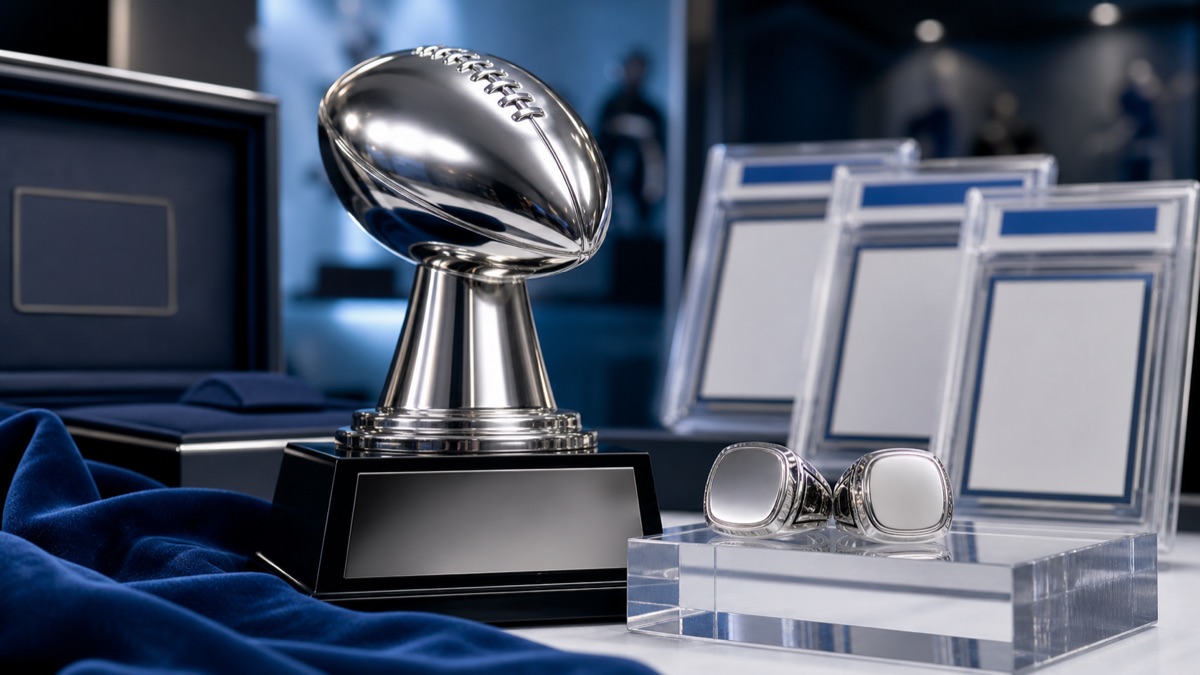
Championship memorabilia includes rings, trophies, awards, banners, tickets, programs, apparel, photos, and replicas connected to a title season or event. The key question is not whether the piece looks impressive; it is exactly what the item is and what documentation proves.
We slow down hard in this category because small wording differences can change everything. Player ring, staff ring, executive ring, salesman's sample, commemorative replica, and fan retail piece are not interchangeable descriptions.
Types of championship memorabilia collectors see
Championship pieces range from inexpensive souvenirs to major collection centerpieces. A ticket from the deciding game, a parade program, a team-issued photo, a player award, a presentation trophy, a staff ring, or a replica ring can all belong in a serious collection if described correctly.
The challenge is that championship language creates emotion. Collectors naturally attach the item to the celebration, the roster, and the memory. Sellers sometimes lean on that emotion with loose wording. Our job as collectors is to separate the event from the object and ask what the object can actually prove.
If the item is paper-based, condition and event clarity matter. If it is jewelry or an award, recipient class and source matter. If it is a replica, honesty and display appeal matter. For ticket-focused collecting, our guide to collecting championship tickets is the better starting point.
Player rings, staff rings, samples, and replicas
Rings are the category where wording matters most. A player ring is generally the strongest claim because it is tied to a rostered athlete. Staff, executive, ownership, scout, broadcaster, and front-office rings can also be collectible, but the buyer pool and value logic may differ. The recipient's role should be stated clearly.
Salesman's samples and manufacturer samples occupy a different lane. They may be made to show design, quality, or sales possibilities, but they are not the same as a ring awarded to a specific person after a championship. Some collectors enjoy them; others only want awarded pieces. Both positions are reasonable if the description is honest.
Replicas are not automatically bad. A licensed or well-made replica can be a strong display item at a more approachable budget. The problem starts when replica language gets buried, or when a commemorative piece is described in a way that implies team presentation or personal award status.
- Player awarded: tied to a specific athlete and usually the most scrutinized claim.
- Staff or executive awarded: legitimate if the role and source are documented.
- Salesman's sample: collectible as a sample, not as a personal award.
- Replica or retail: display value depends on quality, honesty, condition, and demand.
Why championship documentation is everything
Championship memorabilia often needs stronger documentation than ordinary souvenirs because the claims are more specific and the values can spread widely. The paperwork should connect the item to the team, season, recipient, source, or event in a way that survives beyond the current seller's story.
Useful documentation may include team letters, manufacturer paperwork, original boxes, engraving, purchase receipts, auction provenance, player or family letters, photos of the recipient with the item, or a documented chain from the source to the current owner. The more important the item, the more we want multiple pieces of evidence.
A certificate that simply says championship ring without naming the recipient class, team, year, or source is weak. A strong file lets a future collector understand why the item is what it says it is. Our provenance and chain of custody guide explains how to build and preserve that file.
- Identify the exact item: ring, trophy, award, replica, sample, ticket, or apparel.
- Identify the connection: player, staff, team, league, manufacturer, event, or retail release.
- Match physical details: engraving, size, materials, marks, tags, boxes, and paperwork.
- Preserve the chain: seller history, receipts, photos, letters, and prior auction records.
Trophies, awards, and presentation pieces
Trophies and awards can be harder to evaluate than rings because many are unique, privately presented, locally produced, or created for banquets, sponsors, teams, schools, or media groups. The object may be completely real and still not be the trophy most buyers imagine from the headline.
Read plaques and inscriptions carefully. Presented to language, replica wording, sponsor names, event titles, and date details all matter. A trophy made for a team employee, a player award dinner, a media event, or a retail promotion can be collectible, but each belongs in a different value bucket.
Condition also matters in practical ways. Large trophies can have loose plates, scratches, replaced bases, missing finials, tarnish, or fragile cases. Before buying, consider whether you can store, insure, and display the item properly. The bigger the object, the more ownership friction becomes part of the cost.
Buying championship memorabilia safely
The safest buying habit is to make the seller define the claim in writing. Ask what the item is, who received it, how it left the original source, what paperwork is included, and whether any part is restored, replaced, or replica. If the answer is mostly mood and not evidence, slow down.
Comparison can be difficult because true championship pieces are not always common. Instead of forcing exact comps, compare categories: awarded versus replica, player versus staff, documented versus undocumented, centerpiece versus souvenir. That framework keeps emotion from doing all the pricing work.
Auctions can help when the item has enough documentation for multiple bidders to understand the same story. Our auction listings are best suited to pieces where the description, photos, and supporting evidence can be evaluated clearly rather than relying on a vague championship label.
Common questions about championship memorabilia
Are replica championship rings worth collecting? Yes, if you want a display piece and the replica is described honestly. They should be priced and stored as replicas, not treated as awarded rings with missing paperwork.
Is a staff championship ring valuable? It can be, especially with strong documentation and a clear role, but it is not the same as a player ring. The recipient class should be part of the description from the start.
What paperwork should stay with a championship item? Keep everything: letters, receipts, boxes, photos, auction records, authentication documents, emails, and notes about where the piece came from. For team-origin items, our team documentation and COAs guide gives the right mindset.
Ready to hunt?
Sports cards and collectibles — documented and carefully presented.