Authenticate Sports Memorabilia: How It Works
July 9, 2026 · 5 min read · By BGLAD
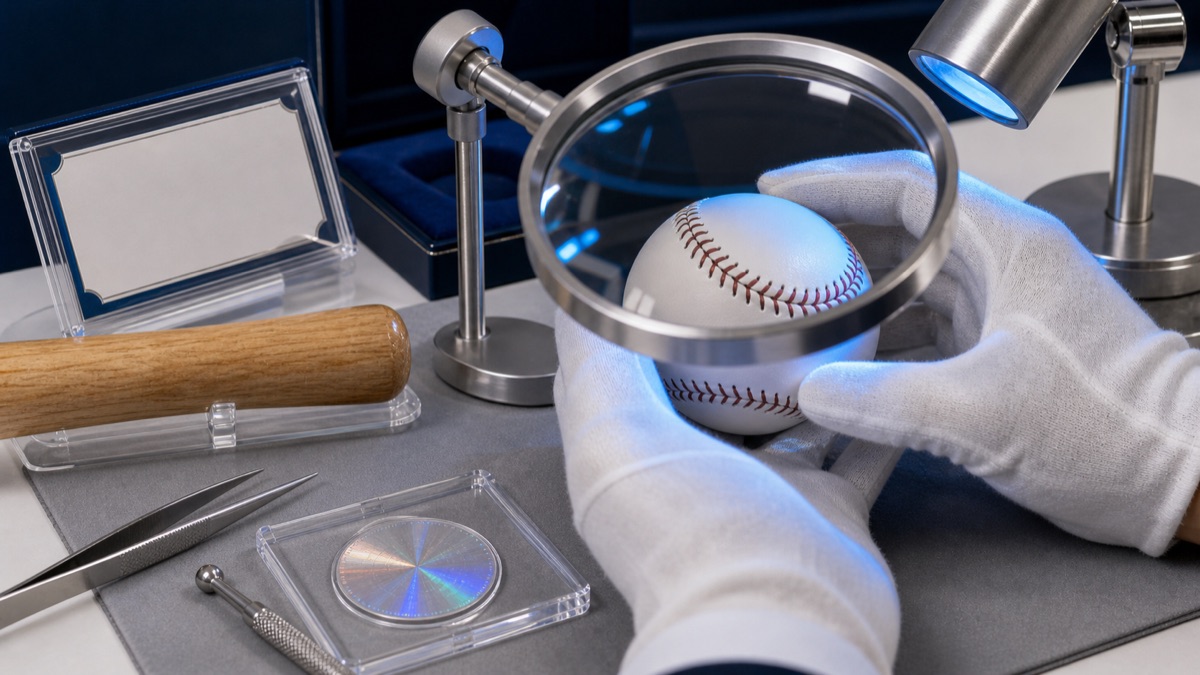
To authenticate sports memorabilia, collectors need to know what the item is, what claim is being made, and what evidence supports that claim. A signed item, a game-used item, a team-issued item, and a replica all require different proof.
The biggest mistake is treating any certificate as a magic answer. Good authentication connects the object, the claim, the paperwork, and the chain of ownership in a way a future buyer can verify.
What sports memorabilia authentication can prove
Authentication starts with the claim. Is the signature genuine? Was the jersey worn in a game? Was the bat issued to a player? Is the ticket from the event described? Was the ring awarded to a player, staff member, or produced as a sales sample? Each question needs a different kind of evidence.
Autograph authentication usually focuses on whether the writing appears genuine. Game-used authentication focuses on whether the item can be tied to a player, team, season, or specific event. Paper authentication may focus on whether the item is original, altered, restored, complete, or correctly described.
A clean description matters because buyers often overread labels. Authenticated signature does not mean authenticated game use. Team-issued does not always mean game-worn. Replica does not mean fake if it is described honestly. Before you pay, identify the exact claim you are relying on.
Third-party authentication for autographs and memorabilia
Third-party authentication gives the market a common reference point. For autographs, an authenticator examines the signature, compares it to known examples, reviews the item context, and issues an opinion through a sticker, letter, database record, slab label, or some combination of those tools.
For memorabilia beyond signatures, the process can be broader. A company or expert may review tagging, manufacturing details, wear patterns, league or team records, photos, serial numbers, inscriptions, provenance, and whether the object matches the era. The more specific the claim, the more specific the evidence should be.
We think of authentication as risk reduction, not perfection. Even strong third-party work should be checked against the physical item and the listing. Our autograph authentication explained guide covers the signature side in more detail, while photo matching game-used memorabilia explains one of the strongest tools for certain worn or used items.
- Autographs: signature style, ink flow, placement, item context, and certification lookup.
- Game-used gear: tagging, wear, repairs, photos, team records, and provenance.
- Tickets and paper: printing, age, event details, alterations, completeness, and condition.
- Awards and rings: recipient class, engraving, manufacturer marks, paperwork, and ownership chain.
COAs vs real sports memorabilia authentication
A certificate of authenticity, or COA, is only as useful as the person or company behind it. Some COAs come from respected authenticators, teams, leagues, manufacturers, or signing events. Others are generic pieces of paper that say little more than the seller wants the item to be real.
A real authentication record should be hard to separate from the item. Sticker numbers should match database entries. Letters should describe the item clearly. Team or league records should connect to an identifiable object. A COA that could be moved to any similar jersey, ball, or photo does not give much comfort.
Collectors should also watch for wording. Phrases such as style jersey, commemorative, attributed to, believed to be, or from the collection of can be honest descriptions, but they are not the same as hard proof. Read the claim literally before you let the item impress you.
Building provenance and chain of custody
Provenance is the item's ownership story backed by evidence. Chain of custody is the path from the original source to the current holder. The stronger that path is, the less a future buyer has to rely on memory or trust.
Good provenance can include original purchase receipts, team letters, auction descriptions, player or family letters, signing photos, database screenshots, matching certification cards, and dated collection records. None of these is automatically enough alone. Together, they can create a file that makes the item easier to understand and easier to resell.
We recommend keeping a digital folder for every meaningful memorabilia piece. Photograph the front, back, tags, labels, signatures, stickers, certificates, boxes, inscriptions, and any defects. Save the listing and receipt. Our guide to provenance and chain of custody goes deeper on how that file protects the collector after the purchase.
- Photograph the object: include full views and close-ups of identifying details.
- Save the source: keep receipts, auction pages, seller messages, and original descriptions.
- Preserve paperwork: do not separate letters, cards, tags, boxes, or authentication inserts.
- Record changes: note framing, repairs, reholdering, or any conservation work.
Common questions about authenticating sports memorabilia
Can you authenticate memorabilia after buying it? Often, yes, but it is better to know the path before you buy. Fees, shipping risk, turnaround time, and the chance of an inconclusive or negative opinion should all be part of the decision.
Is a witnessed signing better than later authentication? For autograph provenance, witnessed signing is usually cleaner because the signature event was recorded at the time. Later authentication can still be useful, especially for older items, but it relies more heavily on examination and comparison.
Should every memorabilia item be authenticated? No. Low-value personal pieces may not justify the cost. Items you might sell, insure, display publicly, or use as collection centerpieces deserve stronger documentation. When we offer documented pieces in our marketplace listings, the goal is to make the claim and supporting evidence clear enough that collectors can judge it.
Ready to hunt?
Sports cards and collectibles — documented and carefully presented.