Display Game Used Items Without Damaging Them
July 9, 2026 · 5 min read · By BGLAD
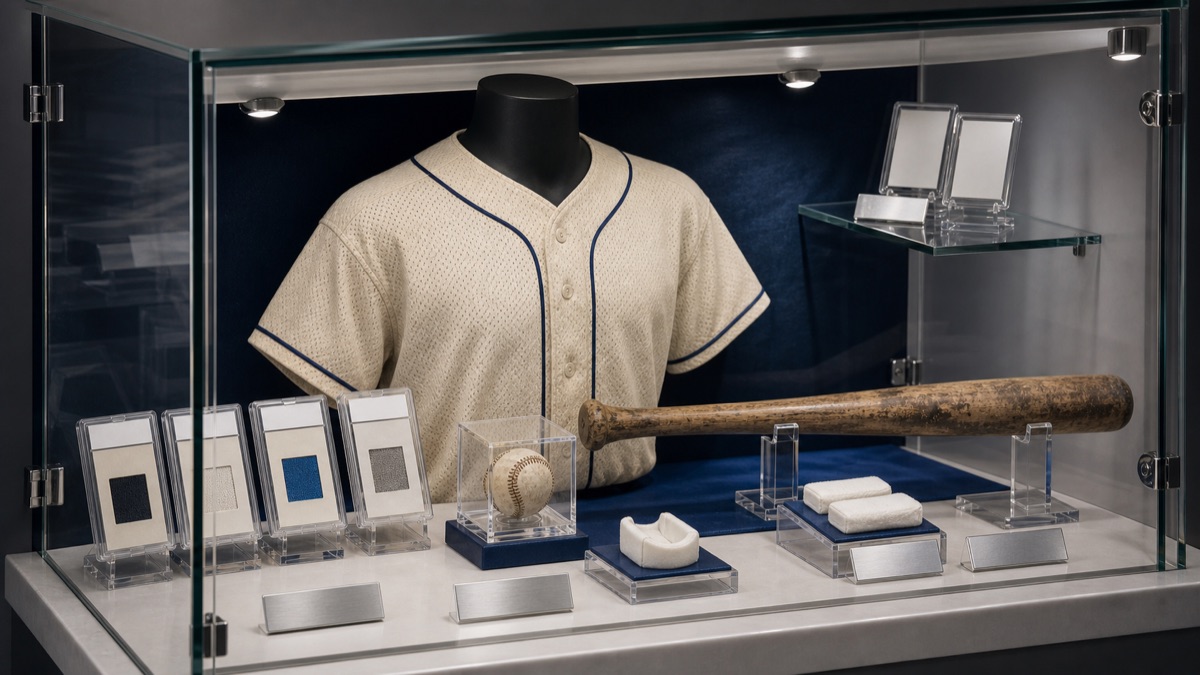
To display game used items safely, support the object without stress, reduce light exposure, control humidity, and keep documentation with clear photos. A good display should let you enjoy the piece without fading signatures, crushing fabric, bending equipment, or hiding proof.
We think display is part of preservation. The goal is not to lock everything away forever; it is to make choices that can be undone later without leaving damage behind.
Safe mounting for jerseys and fabric gear
Jerseys, pants, gloves, warmups, towels, and other fabric pieces need support across a broad area. Thin wire hangers, tight pins, aggressive adhesives, and sharp clips can stretch fabric, create rust stains, or leave permanent holes. For game-used pieces, they can also disturb wear patterns that help support the story.
A framed jersey should sit with enough room that fabric is not compressed against the glazing. The shoulders need support, patches should not be forced flat, and the display should avoid folding the same crease hard for years. If the jersey is signed, the signature area should stay away from pressure points and direct light.
For valuable or fragile fabric, use reversible methods and archival materials where practical. If a mount cannot be removed without tearing stitches, pulling fibers, or leaving residue, it is probably too aggressive for a serious game-used item.
Displaying bats, sticks, balls, and equipment
Hard goods have their own risks. Bats and sticks should be supported at multiple points instead of hanging from one screw, nail, or tight clamp. Balls and pucks should sit in holders that do not squeeze or scratch them. Helmets, shoes, gloves, and masks need stands that support their natural shape.
Avoid mounts that cover the evidence. If a bat has knob markings, barrel marks, pine tar, or a hologram, the display should let those areas be photographed and inspected. If a puck, ball, or base has a league sticker, do not place the sticker against a hidden surface where it rubs every time the item moves.
Good display also thinks about gravity. A heavy item leaning at an awkward angle for years can warp, stress seams, or slide out during a bump. Simple, stable, well-fitted supports are usually better than dramatic mounts that make the object work too hard.
- Jerseys: support shoulders broadly and avoid tight pins, tape, or pressure on signatures.
- Bats and sticks: use two or more padded supports and leave markings visible.
- Balls and pucks: choose holders that cradle without squeezing or scuffing.
- Helmets and shoes: support the shape from below instead of pulling from straps or laces.
- Paperwork: display copies if needed and store original documents separately.
UV protection, humidity, and room conditions
Light is one of the easiest ways to damage memorabilia slowly. Direct sunlight can fade fabric, ink, signatures, ticket stubs, photos, and paper labels. Even indoor light adds up over time. UV-filtering glazing helps, but it does not make an item immune to poor placement.
Humidity matters because memorabilia is made from mixed materials: fabric, leather, wood, adhesives, ink, paper, plastic, metal, and paint. Too much moisture can encourage mold, staining, swelling, rust, and adhesive problems. Air that is extremely dry can stress leather, paper, and some older materials. Stable, moderate conditions are better than dramatic swings.
Our UV protection framing and cases guide covers the display side in more detail, while safe handling of collectibles is worth reading before moving signed, fragile, or high-value pieces around the room.
Rotation and documentation for displayed memorabilia
Rotation is an underrated preservation tool. If you have more items than wall space, rotating displays lets you enjoy the collection while reducing light exposure on any one piece. It also gives you a regular reason to inspect for fading, loose mounts, pests, humidity issues, or case damage.
Rotation also protects your own judgment. When an item stays in the same case for years, small changes become easy to miss. A scheduled swap forces you to handle it carefully, compare it to older photos, and catch problems while they are still small.
Before anything goes on the wall, photograph it. Take full front and back views, close-ups of signatures, tags, holograms, repairs, stains, serial numbers, and any condition issues. Photograph the item again after framing or mounting so there is a record of how it was displayed.
Insurance photos should be clear, current, and stored away from the display area. Keep receipts, appraisals, authentication records, lookup screenshots, and purchase documents with them. If a claim, sale, or consignment ever happens, those images become more than nice collection photos.
Common questions about how to display game used items
Should you frame every game-used jersey? No. Framing can look excellent, but it is not always necessary. Flat archival storage, a high-quality hanger setup, or a rotation system may be better for some jerseys, especially if you need access to tags and interior details.
Is UV glass enough protection? It helps, but it is only one layer. Avoid direct sunlight, keep lighting moderate, rotate sensitive items, and check signatures and fabric over time. Our broader collection display guide explains why room layout matters as much as the case.
Can display hurt resale value? Yes, if it causes fading, stretched fabric, scratches, adhesive residue, missing paperwork, or hidden damage. When we photograph items for our marketplace listings, clear condition images and visible proof help buyers trust that the item was cared for properly.
Ready to hunt?
Sports cards and collectibles — documented and carefully presented.