Game Used Wear: Evaluating Gear the Right Way
July 9, 2026 · 5 min read · By BGLAD
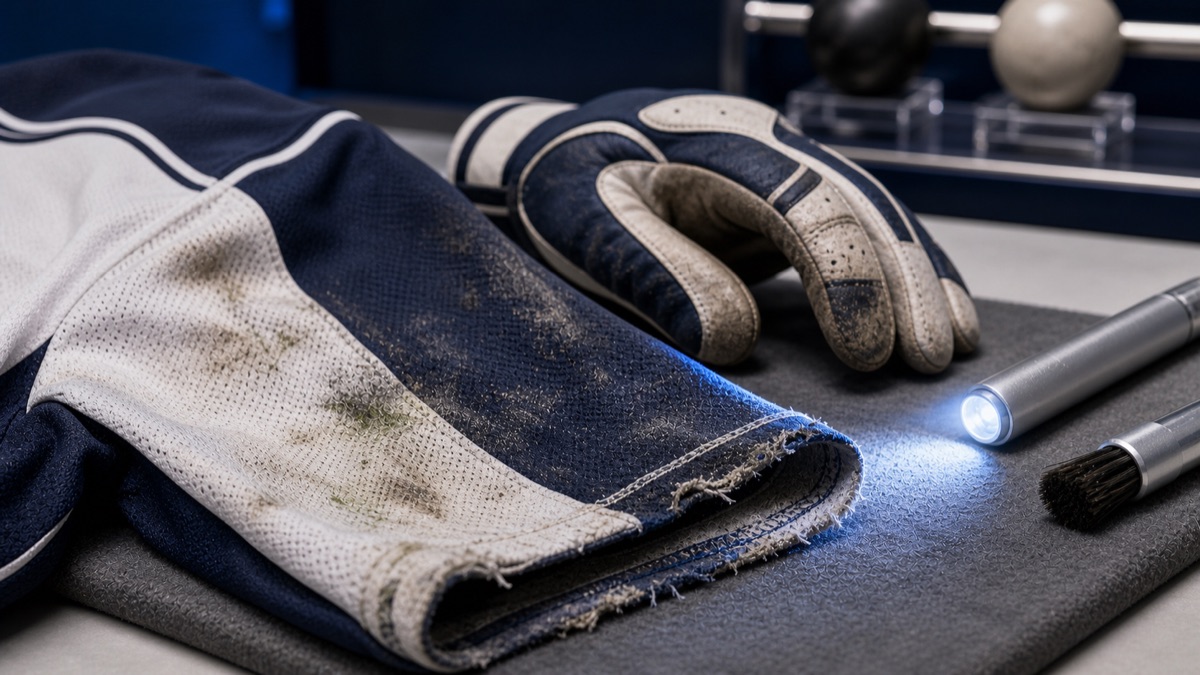
Game used wear is the pattern of marks, use, repairs, and handling that can help show whether a piece of gear was actually used in competition. The right wear supports a story, while the wrong wear can expose a bad description or an item being sold above its proof.
We do not treat wear as magic. Dirt, scuffs, puck marks, pine tar, sweat staining, and loose threads matter only when they make sense for the item type, sport, player, and claimed use period.
Game-used wear starts with the item type
Different equipment wears in different ways. A baseball bat may show ball marks, seam impressions, rack marks, grain separation, handle tape wear, pine tar, or knob markings. A hockey stick may show tape residue, blade wear, board rub, puck marks, and player-specific prep. A jersey may show fabric pulls, repairs, stains, loose stitching, stretched material, or number wear.
Balls, pucks, bases, helmets, gloves, shoes, and warmups each have their own logic. A ball used for one play may show less wear than a bat used across several games. A backup jersey may be real team-issued gear with almost no wear. A heavily worn retail jersey can still be only a fan item. The object has to be judged in its lane.
This is why we start by asking what normal should look like. Before paying for a game-used claim, compare the piece to known examples from the same sport and era. Our game-used bats guide and game-used balls and pucks guide are useful examples of item-specific thinking.
Wear patterns that support a game-used story
Useful wear is consistent, located where use would naturally occur, and specific enough to connect with other evidence. A bat with ball marks on the barrel and appropriate handle treatment tells a more coherent story than random scratches all over the surface. A jersey with team repairs, fabric stress near contact areas, and tagging consistent with the period is stronger than a clean retail jersey with a vague tale.
The best wear also matches the claim. If a seller says a jersey was worn in football contact, we expect different clues than a baseball alternate jersey used lightly. If a stick was supposedly used by a particular player, the curve, tape style, length, flex, and knob may matter as much as the scuffs.
Wear becomes more convincing when it works with provenance, league authentication, or photo matching. A stain by itself is just a stain. A stain that appears in the same place in a dated game image can become a meaningful match point.
- Location: marks appear where the sport and item would naturally create them.
- Consistency: the wear fits the claimed level of use instead of looking staged.
- Specificity: unique marks can be compared to photos, video, or prior records.
- Context: tags, construction, player traits, and paperwork support the same story.
- Stability: repairs or damage are understandable and do not hide key evidence.
Wear versus damage on collectible equipment
Collectors should separate honest wear from condition problems. Honest wear is evidence of use and often part of the appeal. Damage is harm that reduces stability, display quality, or confidence. A team repair on a game-worn jersey may support the claim. A tear from bad storage after the season may simply be a condition flaw.
The line is not always clean. Cracked bat handles, frayed jersey fabric, broken helmet clips, faded signatures, tape residue, odor, rust, and heavy staining can all affect value even if the original item is real. We ask two questions: does this mark support the use story, and does it make the item harder to preserve, display, insure, or sell?
Repairs need special attention. Some team repairs are a positive clue because they reflect real use and equipment-room work. Later repairs can still be acceptable, but they should be disclosed. Hidden repairs, aggressive cleaning, replaced parts, and fresh alterations can weaken the chain of evidence.
How wear can break a game-used claim
Wear can work against a seller just as easily as it can help. If a piece has marks in the wrong places, a modern repair on an older item, inconsistent tagging, retail construction, or wear that appears artificial, the claim should slow down. We do not need to prove fraud to walk away from a story that does not fit the object.
Over-clean items can also be difficult. A spotless piece may still be real, especially if it was issued but not used much, washed by a team, or connected to a short appearance. But if the price depends on heavy game use, the evidence should be stronger than a sentence in the listing.
For specific claims, photo matching is the sharper tool. Wear that looks promising in hand may not match any visible game image. That does not automatically disprove use, but it should prevent the buyer from paying a photo-matched premium. Our photo matching memorabilia guide explains the difference between a true match and a style match.
Common questions about evaluating game-used wear
Does more wear always mean more value? No. Heavy wear can be attractive when it is authentic, stable, and tied to a meaningful item, but excessive damage or bad storage can lower appeal. A lightly used item with stronger provenance may beat a heavily worn item with weak support.
Can game-issued gear show wear? Yes. It may be handled, tried on, used in warmups, altered, stored poorly, or worn outside a game. That is why wear alone does not prove game use. The wording in our game worn vs game issued guide matters before the marks are interpreted.
Should you buy worn gear online? Only when photos and documentation are strong enough for the price. Ask for close-ups of tags, repairs, marks, holograms, paperwork, and defects. When browsing our marketplace listings, we want collectors to be able to see the evidence, not just read a claim.
Ready to hunt?
Sports cards and collectibles — documented and carefully presented.