Find Vintage Tickets: Estate Sales, Shows, and Archives
July 9, 2026 · 5 min read · By BGLAD
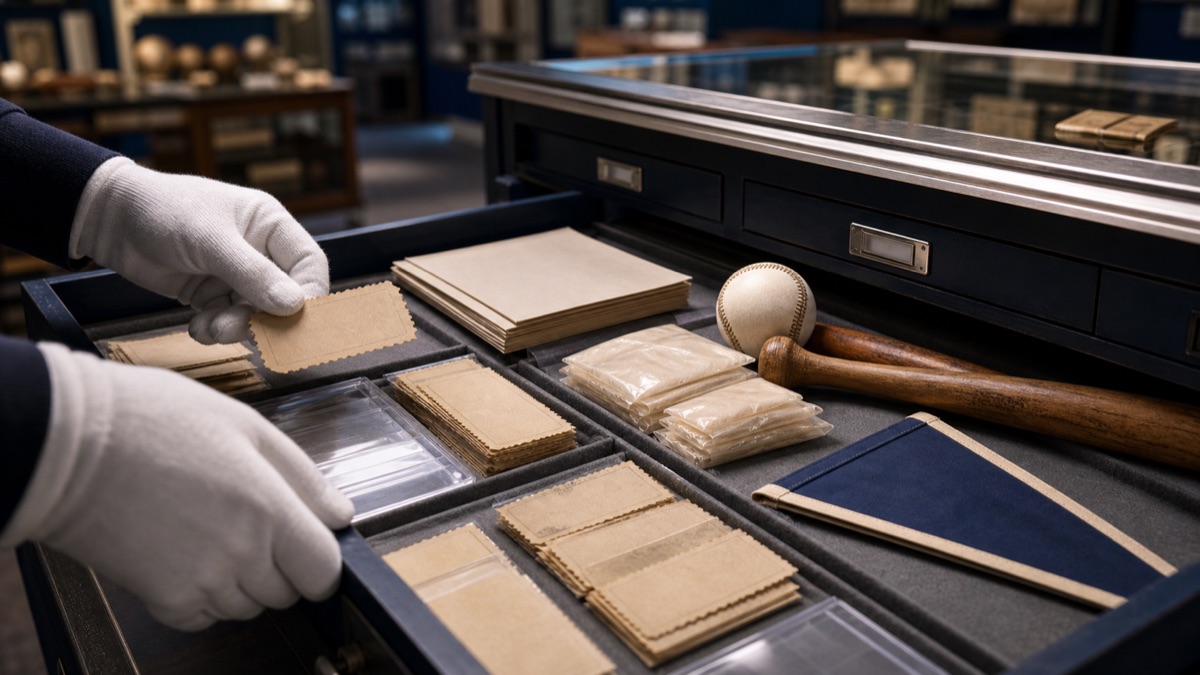
Find vintage tickets by looking where old paper actually survives: estate boxes, family scrapbooks, paper shows, card shows, local auctions, and long-held collections. The best finds usually come from patient sourcing plus quick checks for date, venue, format, and believable wear.
We do not treat every old-looking ticket as vintage or valuable. We want the object, the story, and the paper evidence to agree before we get excited.
Where vintage ticket sourcing starts
Vintage tickets often hide with ordinary paper, not with premium sports cards. Look for albums, programs, newspaper clippings, scorecards, travel folders, desk drawers, envelopes, and old season-ticket packets. A seller may describe the box as sports papers, stadium items, or family keepsakes instead of tickets.
The most useful habit is to ask what else came with the ticket. A stub found with a program, parking pass, photos, and newspaper clipping has more context than a loose ticket that appeared by itself. Context is not the same as proof, but it gives you leads to check.
If you are new to the wider category, our vintage sports memorabilia guide explains how paper, photos, equipment, and souvenirs fit together. Tickets are small, but they follow the same rules: authenticity, condition, provenance, and demand.
Estate sales and family archives
Estate sales can be excellent because tickets often survive in unsorted household paper. The mistake is rushing to the famous name first. Slow down and scan for dates, venue names, team abbreviations, ticket stock, seat lines, and signs that multiple items came from the same person or season.
Family archives deserve care. Ask whether the person attended the game, worked at the venue, wrote about the team, or kept a scrapbook. Write down names, locations, and approximate dates before the story gets separated from the object. A plain envelope with handwriting can be worth saving as context even when it is not part of the ticket itself.
Do not peel tickets from scrapbook pages at the sale table. Tape, glue, and brittle paper can tear quickly. If a piece is attached, evaluate it as attached unless you know how it can be removed safely. Preservation comes before a cleaner photo.
Paper shows, card shows, and local shops
Paper shows attract sellers who understand ephemera, so descriptions can be better and prices can be firmer. Card shows can be more uneven. Some dealers know tickets well; others have a small box of stubs they took in with a collection. Both situations can work if you bring a checklist.
At a show, handle tickets gently and ask before removing anything from a sleeve. Check both sides, compare the listed event to the printed details, and look for missing tabs, trimmed edges, tape, writing, and replaced backing. A fast inspection should still be respectful.
Local shops can help because we see collections before they are fully sorted. If you are selling or consigning a mixed paper group, our sell and consign with us page is the right shop path. If you are buying, ask what the shop knows and what it does not know; clear uncertainty is better than a forced story.
Auctions and online vintage ticket checks
Online sourcing gives you reach, but it removes the ability to feel paper and inspect edges in person. That means photos and seller language matter. A listing should show the full front, full back, corners, edges, and any damage or writing. For expensive tickets, ask for additional photos before bidding.
Be careful with broad labels like original, rare, vintage, or historic when the details are thin. A real vintage ticket should line up with the event date, venue, opponent, ticket format, seat information, typography, and wear pattern. One mismatch may have an innocent explanation, but several mismatches are a warning.
Our guide to how to buy sports cards online safely applies well to tickets too: confirm the seller, read the terms, keep records, and avoid pressure. The object may be different, but the buying discipline is the same.
- Ask for the back: backs often show ads, disclaimers, printing clues, or scrapbook damage.
- Match the event: date, venue, opponent, game number, and league context should make sense.
- Check the format: full ticket, stub, season stock, pass, and commemorative print are different things.
- Look for alteration: trimming, bleaching, backing removal, and repaired tears deserve caution.
- Save the listing: photos and descriptions become part of your purchase record.
Quick authentication checks before you buy
Start with the obvious printed facts. Does the date match the teams and venue? Was the venue using that name at the time? Does the ticket stock look like an admission piece, a program insert, a replica, or a later souvenir? Does the seat format make sense for the arena or stadium?
Next, check wear. Real use can leave soft edges, folds, gate tears, handling marks, and age toning. Artificial aging often looks too even or too dramatic. A perfectly fresh ticket for a hard-to-find event is not impossible, but it needs a stronger explanation.
Finally, know when to stop and research. If the ticket is expensive, tied to a major event, or outside your experience, compare known examples and consider third-party authentication. Our graded tickets explained article covers when a holder can help answer authenticity and preservation questions.
Common questions about finding vintage tickets
Are estate sale tickets always cheaper? No. Some are under-researched, but others are priced aggressively because the seller knows the event. Your edge is careful inspection, not assuming every household sale is a bargain.
Should you buy damaged vintage tickets? Sometimes. Condition matters, but scarce event tickets may still be collectible with creases, tears, or scrapbook residue. Read our ticket condition guide before deciding which flaws you can live with.
What is the first thing to verify? Verify the event. A ticket with the wrong date, venue, or format cannot be saved by an exciting story. Once the event checks out, move to condition, provenance, and price.
Ready to hunt?
Sports cards and collectibles — documented and carefully presented.