Card Storage Humidity: Heat, Moisture & Safe Ranges
July 9, 2026 · 5 min read · By BGLAD
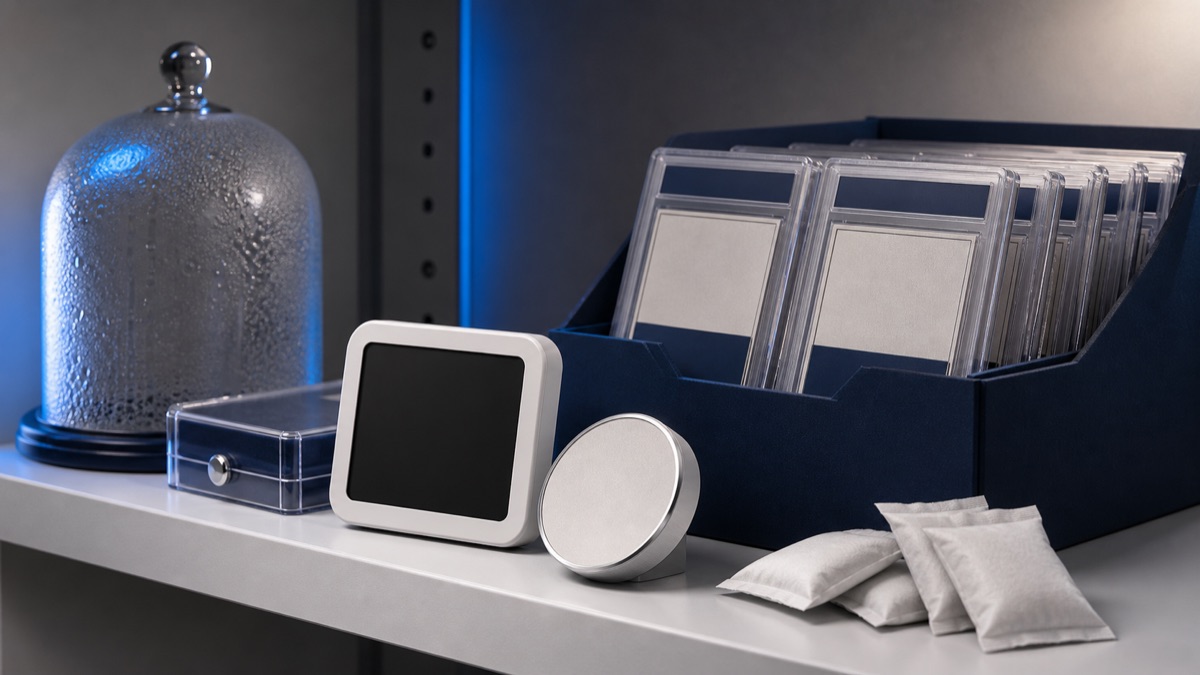
Card storage humidity should be moderate, steady, and monitored, with cards kept away from damp rooms, heat sources, and big temperature swings. Moisture can warp cardboard, soften paper, encourage mildew, and make surfaces stick, while heat speeds up many of the same problems.
We do not chase laboratory conditions for normal home collections. We want a room that behaves predictably through the year, plus a cheap way to notice when the room stops behaving.
What moisture does to cardboard and cards
Cardboard absorbs and releases moisture. When humidity rises, paper fibers can swell, cards can bow, and glossy surfaces can feel less crisp. When conditions swing back, the card may not return perfectly flat. Repeated cycles are especially hard on older cards, thicker stock, foil surfaces, chrome cards, and anything with layers.
Moisture also changes the storage around the card. Boxes soften. Sleeves can cling. Photos and glossy items may stick if pressed together. Paper tickets, programs, and autographs can become wavy or develop stains. In very damp spaces, mildew and odor become bigger concerns than normal corner wear.
If you need the broader storage basics, start with how to store and protect your collection. This article focuses on the room itself, because the best sleeve still has to live somewhere.
Heat and temperature swings in card storage
Heat is not only uncomfortable; it can stress the materials around collectibles. Adhesives, labels, ink, plastic holders, and old paper all dislike hot, changing environments. A card left in a hot car, attic, garage, or sun-facing room is taking on risk that has nothing to do with centering or corners.
Temperature swings matter because the room and the materials keep expanding, contracting, absorbing, and releasing moisture. A space that is cool at night and hot by afternoon can create more movement than a room that is slightly imperfect but steady. Stability is the collector's friend.
Keep cards away from direct vents, radiators, fireplaces, space heaters, dehumidifiers blowing straight at boxes, and windowsills. If the room feels different every time you walk in, measure it before trusting it with your better cards.
Best and worst rooms for card storage humidity
In most homes, the best card storage room is an interior, conditioned space where people would be comfortable year-round. A bedroom closet, office cabinet, or interior hallway storage area often beats a large unfinished space because the temperature and humidity move less.
Basements, attics, and garages need extra skepticism. Some finished basements are dry and stable. Many unfinished basements are not. Attics and garages usually see bigger temperature swings, more dust, and more pest exposure. A collection stored there may look fine for a while, then show problems after one bad season.
- Best candidates: interior closets, offices, bedrooms, and finished spaces with steady air and no direct sun.
- Possible with monitoring: dry finished basements, climate-controlled storage rooms, and cabinets on interior walls.
- Usually poor choices: attics, garages, sheds, laundry rooms, bathrooms, and damp basement corners.
- Immediate red flags: musty smell, condensation, soft boxes, rusty staples, curling paper, or cards that feel limp.
Conceptual target ranges for card storage humidity
Collectors often ask for one perfect number. We think the better target is a moderate band with small swings. The room should not feel damp, sticky, hot, or overly dry, and the gauge should not spend long stretches near the extreme ends. If the room stays comfortable for people and boring on the monitor, it is usually a better candidate than a dramatic space that needs constant correction.
Do not over-correct. Running a dehumidifier too hard, blasting boxes with dry air, or sealing damp items inside tight containers can create new problems. The goal is slow, steady storage, not a daily fight with the room.
Sealed wax also belongs in stable conditions. Boxes and wrappers can show crushing, warping, odor, or seal problems if stored poorly. When you browse sealed boxes, think about where they will live before they arrive, especially if you plan to hold them unopened.
Cheap monitoring and simple humidity fixes
A basic digital hygrometer is one of the cheapest useful tools in a collection room. Put one near the cards, not across the room by a vent. Check it at different times of day and during different seasons. The pattern matters more than one reading.
Simple fixes often beat complicated ones. Move boxes off concrete floors. Add air space around shelves. Keep cards out of exterior-wall cabinets. Use a dehumidifier for a damp room, but empty and maintain it. Replace soft or musty cardboard boxes instead of trusting them around better cards.
Do not use scented products, household cleaners, or mystery moisture packs around cards without understanding what they release. For most collections, clean boxes, sleeves, stable shelves, and a monitored room do more good than gimmicks.
- Place monitors inside the storage zone: shelves and closets can behave differently than the open room.
- Record seasonal changes: summer humidity and winter dryness may create different risks.
- Use risers or shelves: keep boxes off floors, especially concrete and basement floors.
- Inspect holders: look for sticking sleeves, cloudy plastics, warped cards, and box odor.
Common questions about card storage humidity
Are basements safe for cards? Some are, but only if they are dry, finished, monitored, and free of musty odor. A basement that needs constant rescue after storms is not a good card room.
Are attics or garages ever okay for sports cards? We would avoid them for meaningful collections. Heat, cold, dust, pests, and humidity swings make them poor long-term storage spaces.
Can slabs or top loaders stop humidity damage? They help with handling and structure, but they do not create perfect climate control. For displays, combine good holders with the light guidance in UV protection framing and cases and the layout ideas in building a card room.
Ready to hunt?
Sports cards and collectibles — documented and carefully presented.