Card Room Ideas: Building a Collector's Cave
July 9, 2026 · 6 min read · By BGLAD
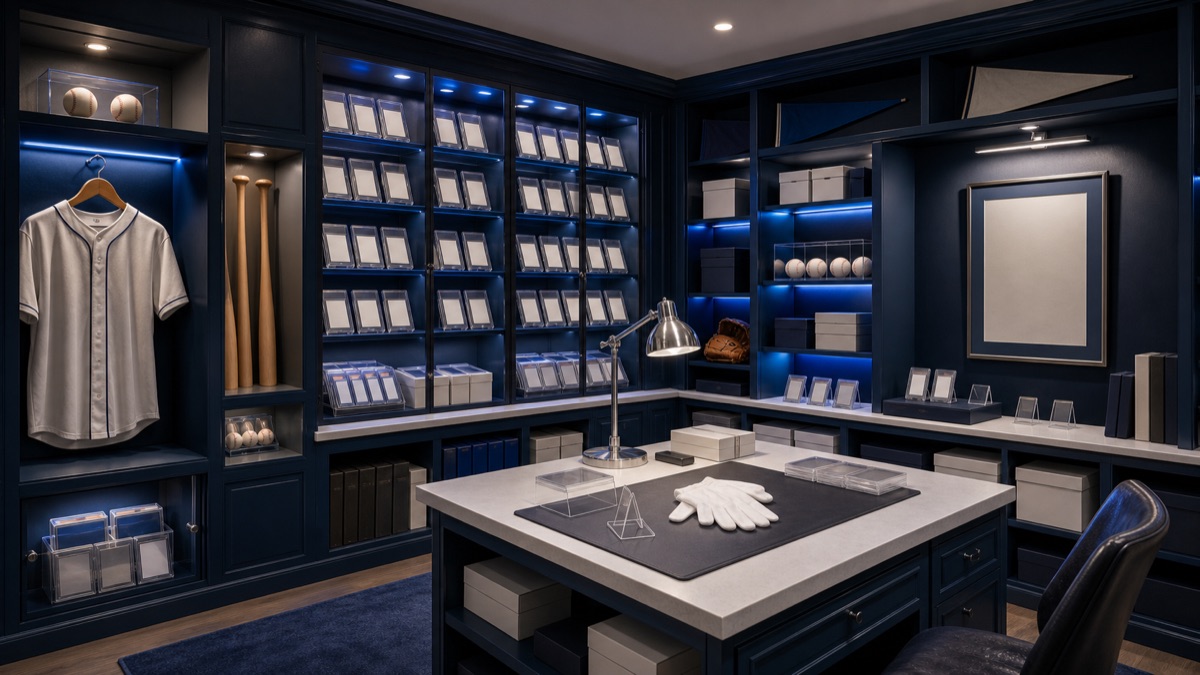
The best card room ideas start with zones: a place to store, a place to sort, a place to display, and a place to work without exposing cards to light, moisture, or clutter. A collector's cave should make the collection easier to enjoy and harder to damage.
We do not think a card room has to be fancy. It has to be stable, organized, comfortable, and boring in the ways that protect cardboard: no damp corners, no sun-baked shelves, no mystery piles, and no valuable cards balanced on the edge of a desk.
Card room layout starts with collector zones
Before buying shelves or lights, map the room by workflow. Storage belongs in the safest, most stable part of the room. Sorting needs a clear table. Display needs walls or shelves away from windows. Shipping or breaking needs trash space, supplies, and enough surface area that cards are not stacked in risky piles.
We like four simple zones: archive storage, active sorting, display, and work station. Archive storage is for boxes, binders, sealed product, graded cards, and items that do not need daily handling. Active sorting is where new purchases, show pickups, and mail-day cards get processed. Display is for the few pieces currently on view. The work station is for listing, photographing, sleeving, and packing.
If the room is small, zones can share furniture, but they should not share chaos. A desk can be both sorting station and photo station, but it should be reset after each session. Our collection storage guide is a good baseline before the room turns into furniture shopping.
Shelving and storage furniture for sports cards
Shelving should be strong, level, and deep enough for the boxes you actually use. Cardboard storage boxes get heavy quickly, and wobbling shelves create handling risk every time you pull one out. Put heavier boxes low, keep aisles clear, and avoid stacking so high that you need to lift valuable cards over your head.
Closed cabinets help with dust and privacy. Open shelves are faster to use but need better discipline because every loose pile becomes visible and tempting to move. For slabs, shallow drawers, graded-card boxes, and label-forward rows make searching easier. For raw cards, use boxes that keep cards upright without crushing corners.
Sealed wax needs the same room discipline as singles. Keep boxes off the floor, away from heat, and out of damp storage. If your room includes unopened product, compare our current sealed boxes with the storage space you have, not just the shelf space you hope to build later.
- Use lower shelves for weight: monster boxes, bulk, and sealed cases belong where a slip is less costly.
- Label by system: team, player, set, year, grade, or project, but keep the same logic across the room.
- Leave working clearance: shelves packed edge to edge are hard to inspect and easy to bump.
- Keep floor storage temporary: floor boxes find moisture, dust, feet, and vacuum cleaners.
Lighting safely in a card room
A card room needs enough light to inspect corners and surfaces, but not constant bright light on displayed cards. Use room lighting for work and controlled display lighting for viewing. Avoid direct sunlight first; no bulb choice fixes a card room that uses a sunny window as the main display wall.
LED task lights are useful at the desk because they can be aimed and turned off when the session ends. Keep lamps from heating holders or shining on the same card all day. For displays, use switches, dimmers, or timers so light is on when someone is actually viewing the collection.
Wall color and desk color matter more than collectors expect. A neutral work surface makes card edges easier to see. A darker display wall can reduce glare. What we avoid is a glossy room full of reflections, because glare makes inspection harder and encourages people to handle cards more than necessary.
Desk and breaking station setup
The desk is where most accidental damage happens. A card comes out of a pack, a sleeve is not ready, a drink is nearby, or a stack slides into a keyboard. Build the desk so the safe action is the easy action: sleeves within reach, clean mat down, trash off to the side, and one active stack at a time.
For breaking or opening mail, separate cutting from cards. Use a package opener away from the sorting mat, then move the contents to the clean surface. Cardboard dust, tape residue, team bags, and shipping peanuts do not belong under raw cards.
- Work over a mat: a clean, non-shedding desk mat cushions cards and makes dropped items easier to see.
- Stage supplies first: sleeves, top loaders, team bags, labels, and microfiber cloths should be ready before the first pack opens.
- Keep drinks out: use a different table or a closed bottle on the floor away from boxes.
- Add photo space: a small light, neutral backdrop, and phone stand make cataloging and selling easier.
- Reset after sessions: put cards into their next holder before leaving the room.
Security basics for a collector's cave
Security starts with discretion. A card room does not need to be a public showroom. Be careful about posting wide photos that show room layout, door locations, safes, addresses on shipping labels, or the full scale of the collection. Share the cards, not the blueprint.
Use locks where they make sense. A locking cabinet, interior door lock, safe, or off-site storage box can all be reasonable depending on value and household traffic. The point is to add friction. The most handled items can stay accessible; the most valuable or irreplaceable pieces should not be the easiest things to grab.
Photograph and catalog the room before something goes wrong. Fronts, backs, labels, serial numbers, receipts, and appraisals help with insurance, selling, and recovery. For display choices, our guide to displaying a collection at home pairs well with a room plan, and photographing your collection is the next habit to build.
Common questions about card room ideas
Is a basement a good card room? A finished, dry, monitored basement can work. A damp basement with seasonal odor, concrete-floor storage, or humidity swings is a bad candidate unless the environment is fixed first.
Should cards be displayed in the same room where they are stored? It is fine if the room is stable and the display is controlled. Keep the best pieces in darker storage and rotate a smaller group onto shelves or walls.
How much space does a card room need? Less than most collectors think. A closet, desk, and one strong shelving unit can outperform a large room with poor labels and weak climate control. For environmental planning, see our card storage humidity guide.
Ready to hunt?
Sports cards and collectibles — documented and carefully presented.