Relic Cards: Swatches vs Full Game-Used Items
July 9, 2026 · 5 min read · By BGLAD
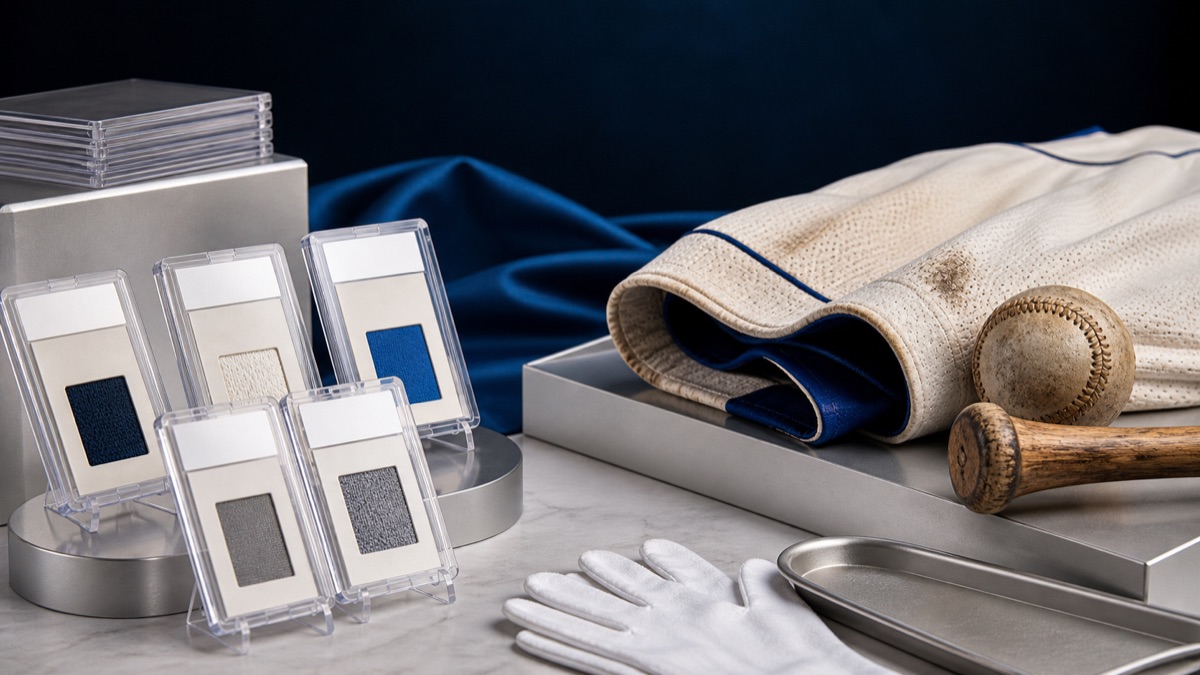
Relic cards are trading cards that contain a small piece of material, such as jersey fabric, bat barrel, patch, ball, glove, or other memorabilia. They can be a fun, affordable way to collect a player connection, but the back-of-card wording decides how close that material really gets to game use.
We treat relic cards and full game-used items as related but different hobbies. One fits inside a card collection and grading box; the other asks for space, provenance, display planning, and a higher proof standard.
What relic cards actually contain
A relic card turns a piece of material into a card feature. The swatch may be plain jersey fabric, a patch, a bat piece, a shoe piece, a ball fragment, a glove piece, or a manufactured commemorative element. The card design often makes the material feel direct and personal, but collectors still have to read the text.
Older and modern products use different language. Some cards state that the material was used in an official game or event. Some say player-worn. Some say the material is not from any specific game, event, or season. Some memorabilia-style inserts use manufactured pieces that are collectible design elements rather than player-used material.
That does not make relic cards bad. It means the collecting appeal should match the claim. A beautiful patch card can be desirable because it looks great, completes a player run, or fits a set chase, even if the wording is less specific than a full game-used jersey.
Reading relic card fine print
The fine print is the whole game. A front label may say jersey, memorabilia, materials, relic, or patch, while the back explains what the issuer is actually claiming. If the card says the enclosed material is not tied to a specific game, event, or season, do not price it like a confirmed game-used swatch from a famous night.
Collectors also need to separate player connection from game connection. Player-worn may mean the athlete wore the item in a controlled setting. Event-worn may have a specific event connection but not a game. Game-used is stronger, but only if the card issuer makes that claim clearly.
This language mirrors full memorabilia. Our game worn vs game issued guide explains why one word can change the buyer's expectations, and those habits apply directly to card backs.
- Game-used: strongest when the card clearly says the material was used in game action.
- Player-worn: connected to the athlete wearing it, but not automatically in a game.
- Event-worn: tied to an event setting, which may or may not be competition.
- Not specific: collectible material, but the issuer is avoiding a narrow use claim.
- Manufactured relic: a design insert, not the same as player-used memorabilia.
Relic cards cost less, but give up control
The main advantage of relic cards is access. A collector can own a memorabilia-style card of a favorite player without buying, storing, insuring, or displaying a full jersey, bat, stick, or helmet. Relic cards also fit naturally into player collections, set builds, grading submissions, and showcases.
The tradeoff is control. With a relic card, you usually cannot inspect the original full item, review its tags, trace its chain of custody, or photo-match the material. You are relying on the manufacturer language and the card's authenticity as a card. For many collectors, that is fine. For collectors who want the object and its story, it may feel too distant.
Condition works differently too. A relic card is still judged as a card: corners, edges, surface, centering, foil, autograph quality if signed, and slab condition all matter. If your collection leans toward cards, our graded slabs can be a useful reference point for how presentation and protection shape buying decisions.
Full game-used items offer a deeper story
A full game-used item gives the collector the whole object. That means more evidence, more display presence, and more responsibility. A jersey can show tagging, repairs, sweat staining, loose threads, and patch placement. A bat can show player preparation, ball marks, grain, tape, pine tar, and use patterns. A puck, ball, base, or stick may carry holograms or event records.
The larger object can also support stronger research. You may be able to compare it to photos, league records, team paperwork, auction history, or player-specific habits. Our photo matching memorabilia guide explains why those visible details can turn a broad claim into a specific one.
The downside is friction. Full items cost more to ship, take more room, need safer storage, and can be harder to sell quickly. They also expose mistakes. A vague relic card is often accepted as part of the card product. A full jersey with weak paperwork and questionable wear will be challenged more directly.
Common questions about relic cards and full items
Are relic cards real memorabilia? Often, yes, but the kind of memorabilia depends on the wording. Some contain game-used material, some contain player-worn material, and some contain material with no specific game, event, or season connection.
Are full game-used items always better? Not always. Better depends on the collector. A player-card collector may prefer a sharp patch auto that fits a run. A memorabilia collector may prefer the full jersey with paperwork. A budget collector may prefer several relic cards over one large item.
Do relic cards hold the same story as the original item? Usually no. A swatch can carry a connection, but it loses most of the original object's identifying details. For broader context on mixing formats, our cards vs other collectibles guide helps collectors decide where cards, autographs, and memorabilia fit together.
Ready to hunt?
Sports cards and collectibles — documented and carefully presented.