Short Print Cards & SSPs: What They Are and How to Spot Them
July 9, 2026 · 6 min read · By BGLAD
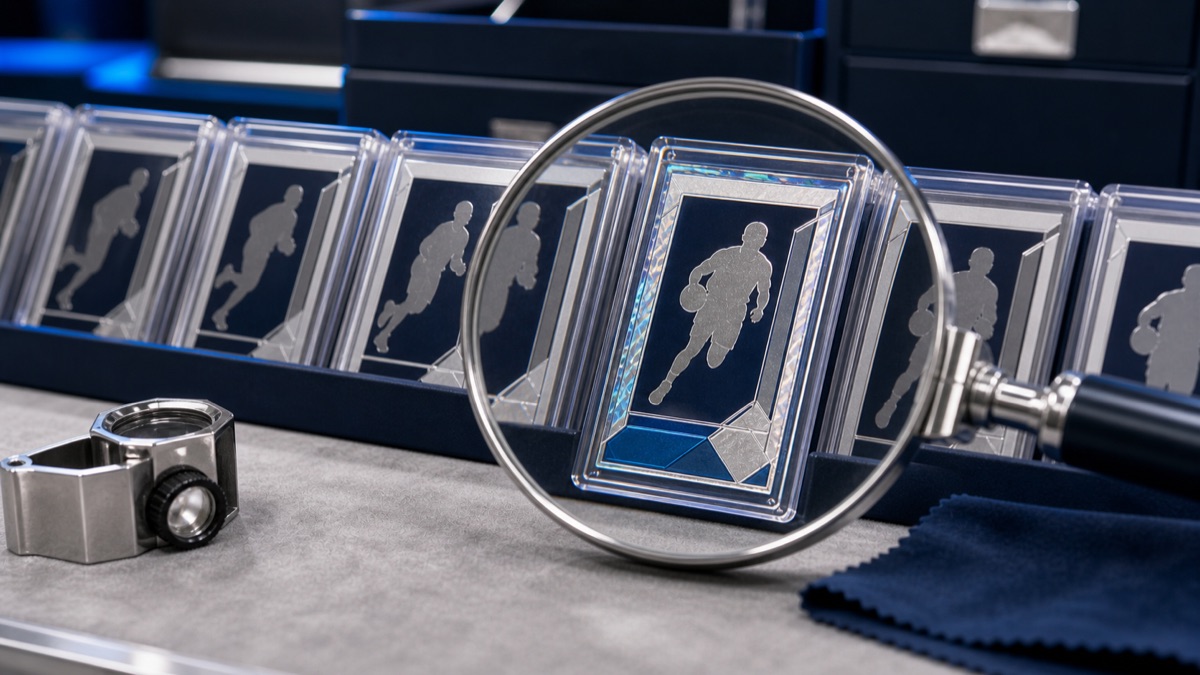
Short print cards are cards produced or distributed in lower quantities than standard cards from the same release. SSP means super short print, a hobby term for an even tougher card, though the exact meaning depends on the product and checklist.
The important part is context. A short print is not automatically valuable, and a card does not become an SP just because it is hard for one person to find. Collectors identify short prints by checklists, odds, card numbers, photo differences, codes, and repeated market evidence.
What short print cards and SSPs mean
A short print is a card that appears less often than the standard cards around it. In some products, the maker clearly labels SPs and SSPs. In others, collectors infer scarcity from pack odds, checklist placement, card numbering, image variations, or how often the card appears across opened product.
SSP stands for super short print. It usually means tougher than a normal SP, but it is not a universal print-run number. One product's SSP may not be comparable to another product's SSP. Treat the label as a signal to research, not as a complete valuation by itself.
This is why we prefer exact identification. Before calling something an SP, confirm the year, product, card number, image, back code, and checklist role. Our sports card checklist guide explains why that roadmap matters.
- SP: short print, usually tougher than standard base cards.
- SSP: super short print, generally tougher than SP but product-specific.
- Variation: a card that differs by photo, pose, image treatment, code, or detail.
- Case hit: a separate hobby term for a tough pull, not always the same as an SSP.
- Unannounced SP: a card collectors identify through evidence rather than clear labeling.
Photo variations and number variations
Many short prints are photo variations. The front design may look like a base card, but the image is different. A player might be shown celebrating instead of batting, wearing an alternate uniform, standing in a different pose, or appearing in a scene that does not match the base card.
Some short prints are tied to numbering instead. They may sit at the end of a checklist, use a different card number range, or have a code on the back that differs from the standard base card. Collectors often compare the fine print, copyright line, or small production code when the image alone is not enough.
Do not guess from looks alone. Modern products can include base cards, parallels, inserts, image variations, short prints, and super short prints that share similar design elements. When in doubt, compare the exact card against a checklist and reliable images.
- Different photo: the most common clue collectors notice first.
- Different card code: small back-of-card numbers may separate versions.
- Checklist placement: SPs may appear in a separate range or notation.
- Odds language: wrappers may describe SP or SSP pull rates by format.
- Parallel confusion: a color or foil change may be a parallel, not an SP.
How collectors identify short print cards
The best method is layered. Start with the checklist, then compare the card number, image, back text, and any known codes. Search the full product name with the player, card number, and words like SP, SSP, variation, or image variation. If the card is numbered, include the serial number tier in your search.
Next, compare actual images. A listing title can be wrong, but the card photo gives clues. Look at the player pose, uniform, background, logo placement, card number, and back code. For chromium cards, make sure you are not confusing a refractor or color parallel with a short print.
Finally, look at market behavior carefully. If many experienced sellers identify the same version as an SP and the checklist supports it, confidence improves. If only one listing uses the term without evidence, be skeptical. The same practical caution applies to buying online generally, as covered in how to buy sports cards online safely.
- Step 1: identify the exact product, year, player, and card number.
- Step 2: compare the image to the standard base version.
- Step 3: check the back code, checklist notes, and odds panel.
- Step 4: search sold and active listings for the exact version.
- Step 5: protect the card while you research, especially if it may be scarce.
Why short prints can carry premiums
Short prints can carry premiums because collectors like scarcity, challenge, and distinctive images. A short print rookie of a popular player may draw more attention than a standard base card because fewer copies surface and the card feels more special inside that product.
Scarcity alone is not enough. Demand has to be there. A short print of a lightly collected player may sit quietly, while a standard card of a major star may sell more easily. Condition, grading, brand, sport, product reputation, and image appeal all affect the premium.
Short prints also create set-building pressure. If an SP is required for a master set or popular variation run, collectors may compete for clean copies. That is different from a one-off oddball card that is scarce but not widely chased.
Protecting and pricing SP and SSP pulls
If you think you pulled a short print, sleeve it first and research second. SPs are often condition-sensitive because collectors compare them closely against other examples. Corners, edges, surface marks, and centering still matter even when the card is rare.
For pricing, compare the exact version whenever possible. Do not price a base card like an SP, and do not price one SP like a lower-numbered parallel unless the market actually treats them similarly. If no exact comps exist, use related versions only as context and stay conservative.
Collectors looking for specific SPs often have better luck buying the card directly than opening more sealed product. Our marketplace listings are built around exact identification for that reason: the version matters as much as the player name.
- Use exact names: year, product, player, card number, and SP or SSP label.
- Compare condition: rare cards still lose demand when damaged.
- Separate versions: base, SP, SSP, parallel, and numbered cards are different comps.
- Watch liquidity: scarce cards may need the right buyer at the right time.
- Keep records: save the checklist source and notes used to identify the card.
Common questions about short print cards
Are all short print cards numbered? No. Many SPs and SSPs are not serial-numbered. Some are identified by photo, checklist notation, pack odds, back codes, or collector-confirmed patterns.
Is an SSP always better than a numbered card? Not always. A numbered card has a stated serial run, while an SSP may have unclear quantity but strong collector interest. Player demand, product reputation, and condition decide more than the label alone. For serial-numbered context, read numbered cards explained.
Can a short print also be a parallel? Sometimes products create parallels of short prints or short-printed inserts, but the checklist has to confirm it. If a card has both traits, identify each part separately before estimating value.
Ready to hunt?
Sports cards and collectibles — documented and carefully presented.