Negotiate Card Prices Without Being That Guy
July 9, 2026 · 6 min read · By BGLAD
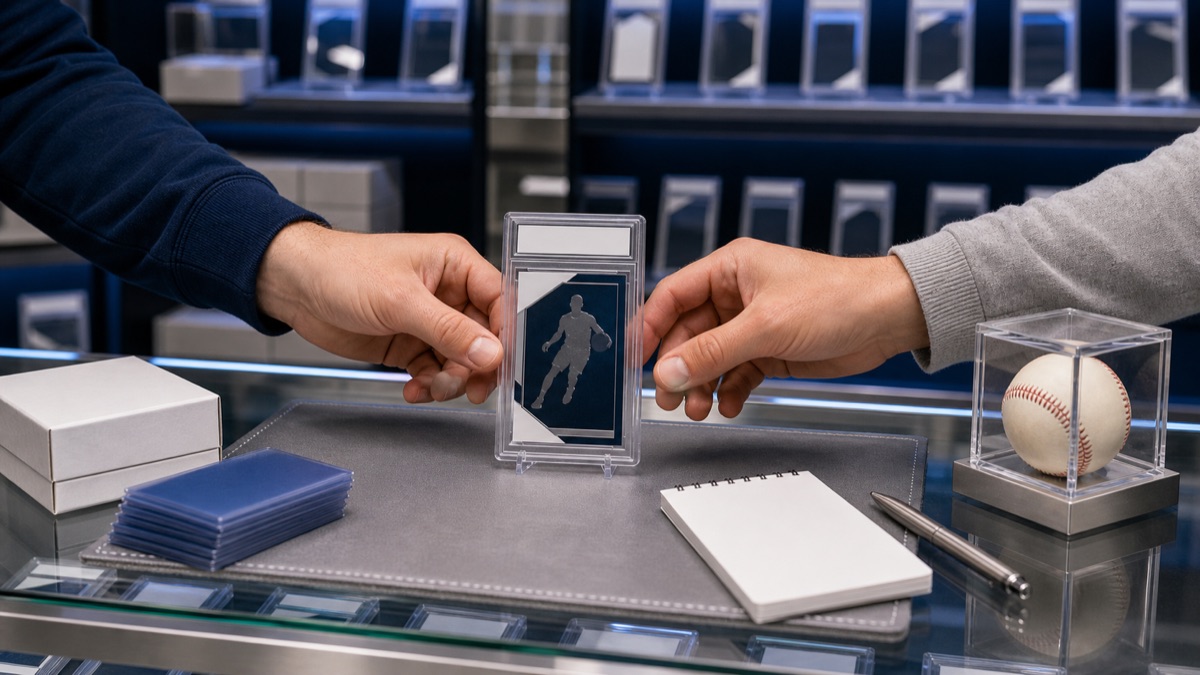
To negotiate card prices well, anchor the conversation with real comps, make a clear offer, and know your walk-away number before the back-and-forth starts. The goal is not to win the argument; it is to see whether a fair deal exists.
Good negotiation feels calm. The collector across from you should understand your math, even if they do not accept your number.
Start card price negotiation with real comps
The strongest offer starts with evidence. Sold comps give both sides a shared reference point, while active listings mostly show what sellers hope to get. Before we make an offer on a card, we want to know the recent range, whether those sales were auctions or fixed-price deals, and how closely they match the card in front of us.
Exact-match comps matter. Year, set, card number, parallel, grade, autograph status, serial number, and visible condition can all change the number. A PSA 10 comp does not price a raw card. A clean copy does not price one with a soft corner. A best-offer listing does not help much if the accepted price is hidden.
When the comps are thin, say so. A scarce card may not have a neat price history, and that is where tone matters. Instead of pretending one old sale settles the issue, we like to frame it as a range: "Here is what I can support, and here is where I would need to be to buy it." Our guide to tracking sports card prices lays out the comp routine in more detail.
- Use sold prices before active asking prices.
- Match the grade, parallel, condition, and sale format as closely as possible.
- Treat one outlier as a question, not the whole market.
- Bring the comp up as context, not as proof that the other person is wrong.
Anchoring offers without insulting the seller
Anchoring means putting the first serious number on the table. It can be useful, but it can also poison the deal if the number feels careless. A respectful low offer is tied to specific reasons: weaker comps, condition concerns, duplicate inventory, fees, shipping risk, or the fact that you are buying multiple cards at once.
An insulting offer usually sounds like a judgment. "Nobody wants this," "the market is dead," or "you will never get that" may be true in the buyer's head, but it rarely helps. If the seller is high, we would rather say, "I am seeing recent sales closer to this range. Would you consider this number?" That keeps the conversation about the card.
The first offer should leave room to move without being fake. If your real ceiling is $220 and you open at $80 on a card with consistent $250 comps, the seller learns that the conversation may not be serious. If your opening number is lower because the card has real flaws, show the math plainly.
Bundle math for sports card deals
Bundles are where many negotiations get sloppy. A stack of cards is not automatically worth the sum of the best recent comp for every card. Liquidity matters. A liquid star rookie may deserve close attention. A pile of slower-moving inserts, base rookies, and common parallels needs a discount because the buyer is taking on sorting time, listing work, fees, and unsold inventory risk.
A clean bundle offer separates the cards into groups. We might value the headline card near the real comp range, put a practical number on the mid-tier cards, and treat the rest as bulk or throw-ins. That is not disrespectful; it is how the resale work actually behaves.
If you are selling a group, do the same exercise before you hear offers. Know which cards carry the lot, which cards are filler, and which cards you are willing to remove if the buyer only wants the better pieces. For a deeper selling framework, our guide to pricing your cards is a useful companion.
- Headline cards: price with the tightest comps.
- Mid-tier cards: discount for time, fees, and slower demand.
- Bulk cards: value by realistic exit path, not emotional attachment.
- Duplicates: discount harder unless demand is clearly deep.
Know your walk-away number before negotiating cards
The walk-away number is the highest price you will pay as a buyer or the lowest net you will accept as a seller. Decide it before the negotiation gets personal. If the conversation moves past that number, you do not need a speech. You can just say, "I appreciate it, but I am going to pass at that level."
Your walk-away number should include the whole deal. For buyers, that means shipping, tax, grading risk, authentication risk, payment terms, and whether the card is easy to replace. For sellers, it means platform fees, payment fees, shipping supplies, insurance, returns, and how quickly you need the cash.
Sometimes the best negotiation move is to stop. A deal that only works if every optimistic assumption comes true is not really a deal. We see this often when a raw card is priced as if it already graded perfectly, or when a seller wants the highest public comp without accounting for weaker eye appeal.
Use card marketplaces and shop counters well
Online negotiation and in-person negotiation have different rhythms. Online, short messages work best: identify the card, make the offer, explain the one or two strongest reasons, and leave the seller room to answer. In person, body language and timing matter more. Do not block a showcase, interrupt another customer's deal, or turn a quick offer into a debate.
A shop counter is not a courtroom. We price cards based on what we can sell them for, what we already have in stock, condition, demand, and the work required after purchase. If you bring us a fair offer or a clean sell pile, we can move faster because the important information is already organized.
The same applies when you are buying from our marketplace listings. Compare the card, make a serious offer when offers are open, and keep the message focused on the card rather than the seller's motivation.
Common questions about negotiating card prices
What is a fair first offer on a sports card? It depends on comps, condition, and format, but the offer should be close enough that the seller believes a deal is possible. If your number is far below market, explain the condition issue or bundle math behind it.
Is it rude to lowball a card seller? A low offer is not automatically rude. It becomes rude when it ignores obvious comps, attacks the seller, or demands a response. A respectful offer gives a number, gives the reason, and accepts "no" without drama.
Should you negotiate at card shows? Yes, but timing matters. Be direct, be quick when the booth is busy, and do not grind over tiny differences on every card. Our card shows for beginners guide covers the etiquette side of buying in person.
Ready to hunt?
Sports cards and collectibles — documented and carefully presented.